Exodus 10:1–6 · Exodus 10 scene
Moses warns that locusts will consume what remains
The confrontation is now both immediate and remembered in advance. Pharaoh’s refusal is becoming part of a story Israel is told to preserve.
What changes in this scene?
The image shows Moses and Aaron addressing Pharaoh while damaged fields are visible beyond the court, linking the warning directly to the previous plague.
Read it in the chapter’s flow
The scene is warning, not yet swarm. Keeping the land visible helps the reader understand why another agricultural plague is especially threatening now.
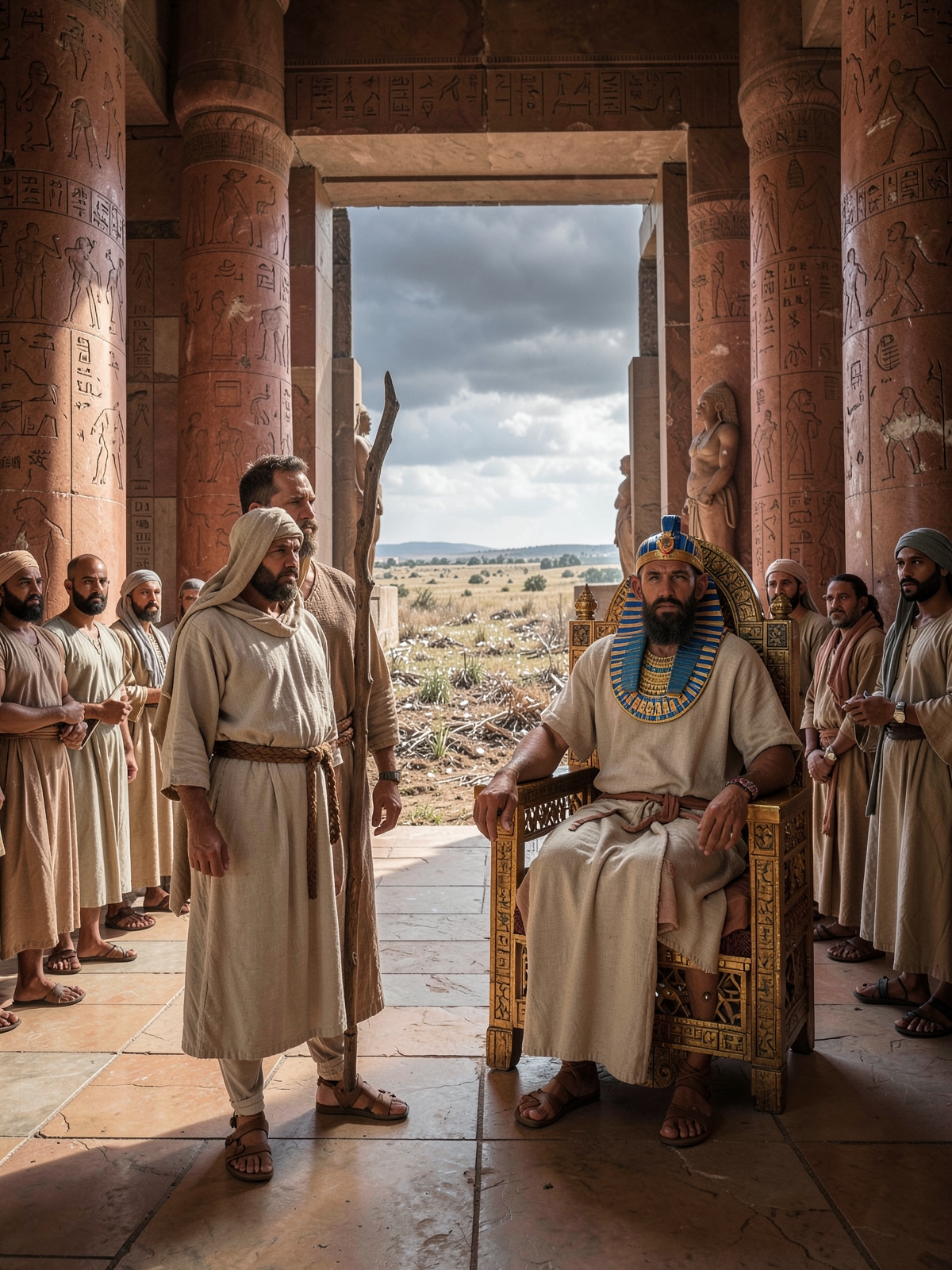
Generated SacraScenes visual interpretation for Exodus 10:1–6. It is not a photograph, archaeological reconstruction or doctrinal authority.
Why the visual is framed this way
Pharaoh’s own servants then press him to reconsider before Moses and Aaron are brought back to negotiate.
Reading this scene carefully
Moses and Aaron warning Pharaoh in an ancient Egyptian audience space with hail-damaged fields visible beyond an open court, serious political confrontation before any locust swarm appears.
Source boundary
The page you are reading is original SacraScenes editorial content. It explains the scene boundary, narrative movement and visual choices without presenting the commentary as Scripture. In the immersive reader, the Story panel remains separate from the Scripture panel, and the public-domain edition is named beneath the source text. This separation lets readers compare the retelling with the source instead of relying on a blended paraphrase.
For Exodus 10, the immersive reader currently uses the public-domain World English Bible (Catholic). Slovenian and German visual scenes remain unavailable until their historical Catholic source text is reviewed. See Sources for attribution and Methodology for the editorial checklist.
Open Exodus 10:1–6 in the immersive reader →Back to all 4 scenes
Editorial scene note updated 30 September 2026.