Exodus 2:23–25 · Exodus 2 scene
Israel groans under slavery
The closing verses connect human suffering to the covenant story without yet showing a visible deliverance. They prepare the divine call that will begin at the burning bush.
What changes in this scene?
God is not depicted as a human figure. The visual stays with exhausted families and workers at evening, allowing the text to carry the statement that God hears, remembers, sees and knows.
Read it in the chapter’s flow
The scene is intentionally unresolved. The people do not yet know what Moses will be called to do, but the reader is told that their suffering is seen and heard.
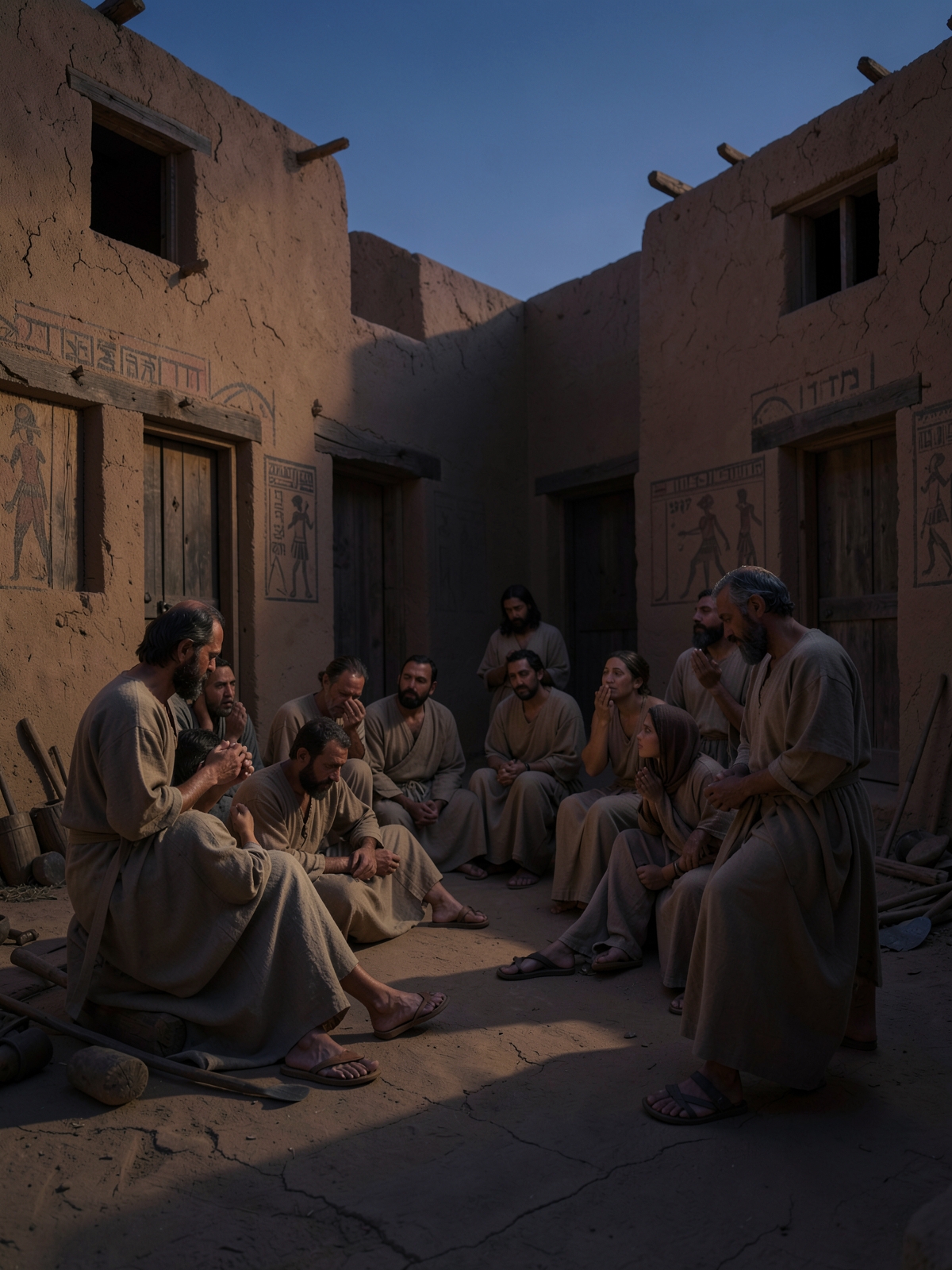
Generated SacraScenes visual interpretation for Exodus 2:23–25. It is not a photograph, archaeological reconstruction or doctrinal authority.
Why the visual is framed this way
Exodus 3 opens with Moses far away in Midian, tending sheep near Horeb.
Reading this scene carefully
Hebrew families and exhausted laborers gathered quietly at dusk after forced work in ancient Egypt, faces lifted or bowed in grief and prayer, subtle hopeful light, no visible divine human figure or graphic abuse.
Source boundary
The page you are reading is original SacraScenes editorial content. It explains the scene boundary, narrative movement and visual choices without presenting the commentary as Scripture. In the immersive reader, the Story panel remains separate from the Scripture panel, and the public-domain edition is named beneath the source text. This separation lets readers compare the retelling with the source instead of relying on a blended paraphrase.
For Exodus 2, the immersive reader currently uses the public-domain World English Bible (Catholic). Slovenian and German visual scenes remain unavailable until their historical Catholic source text is reviewed. See Sources for attribution and Methodology for the editorial checklist.
Open Exodus 2:23–25 in the immersive reader →Back to all 4 scenes
Editorial scene note updated 30 September 2026.