Exodus 3:1–6 · Exodus 3 scene
Moses sees the bush that burns without being consumed
An ordinary shepherding day becomes an encounter that interrupts Moses’ long exile. Curiosity gives way to reverence when the voice identifies itself with the God of his ancestors.
What changes in this scene?
God is not shown as a person. The burning bush and Moses’ posture carry the visual scene, with fire contained to the bush and no fantasy figure inside it.
Read it in the chapter’s flow
The passage gives both visual sign and sacred boundary. SacraScenes emphasizes Moses turning aside and removing sandals rather than inventing a divine appearance.
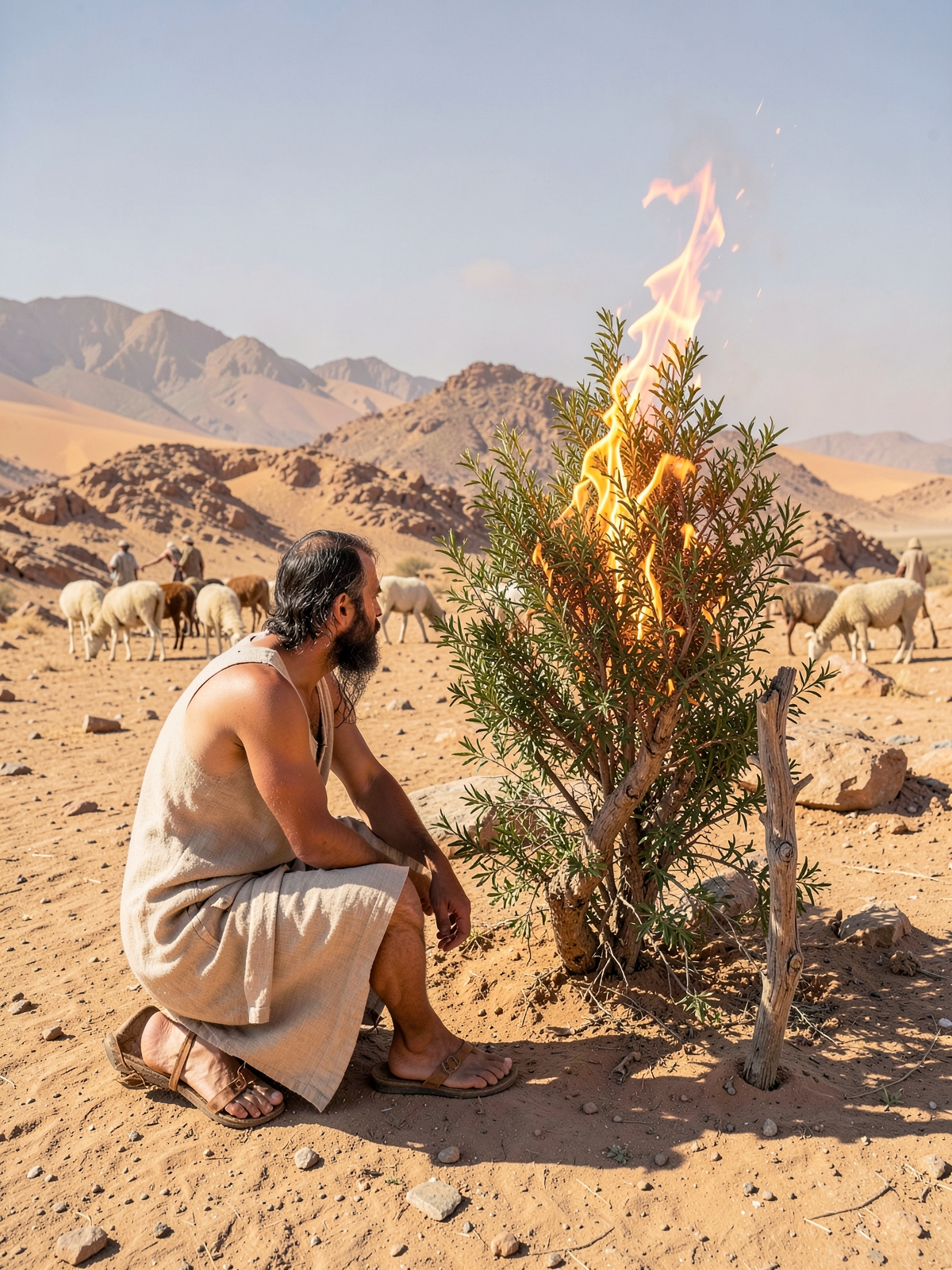
Generated SacraScenes visual interpretation for Exodus 3:1–6. It is not a photograph, archaeological reconstruction or doctrinal authority.
Why the visual is framed this way
The next scene explains why Moses has been called: Israel’s suffering has been seen and Moses is being sent to Pharaoh.
Reading this scene carefully
Moses as a shepherd near Horeb kneeling or removing his sandals before a desert bush burning brightly without being consumed, sheep at a distance, no human-shaped deity, no figure inside the flames, reverent natural setting.
Source boundary
The page you are reading is original SacraScenes editorial content. It explains the scene boundary, narrative movement and visual choices without presenting the commentary as Scripture. In the immersive reader, the Story panel remains separate from the Scripture panel, and the public-domain edition is named beneath the source text. This separation lets readers compare the retelling with the source instead of relying on a blended paraphrase.
For Exodus 3, the immersive reader currently uses the public-domain World English Bible (Catholic). Slovenian and German visual scenes remain unavailable until their historical Catholic source text is reviewed. See Sources for attribution and Methodology for the editorial checklist.
Open Exodus 3:1–6 in the immersive reader →Back to all 4 scenes
Editorial scene note updated 30 September 2026.