Genesis 11:10–26 · Genesis 11 scene
From Shem to Terah
After Babel, Genesis abruptly returns to a structured genealogy. The line begins with Shem and moves through Arpachshad, Shelah, Eber, Peleg, Reu, Serug and Nahor before reaching Terah. Each generation is marked by age, the birth of the next named son, additional sons and daughters, and more years of life. The repeated formula is familiar from Genesis 5, but the direction is different: this genealogy is not leading to Noah. It is narrowing the post-flood world toward the household from which Abram will emerge.
What changes in this scene?
SacraScenes keeps verses 10–26 together because their value lies in continuity and direction, not in treating each ancestor as a standalone dramatic episode. Creating individual pages for Arpachshad, Shelah or Reu would produce nearly identical thin content and falsely imply that the text tells separate stories about them. The editorial layer instead asks what the genealogy accomplishes as a whole. It connects Shem to Terah, shortens the distance from the broad table of nations to one specific family and prepares the names Abram, Nahor and Haran before the chapter becomes narrative again.
Read it in the chapter’s flow
Verse 27 begins “the generations of Terah” and immediately changes from repetitive ages to named relationships, marriages, death and migration. Haran dies in Ur, Abram and Nahor marry, Sarai is identified, and Terah leads a family group out of Ur toward Canaan before settling in Haran. That narrative density gives the final verses their own scene. Ending the genealogy at verse 26 preserves the moment when a list of generations becomes a moving household and sets up Genesis 12 without importing Abram’s later call prematurely.
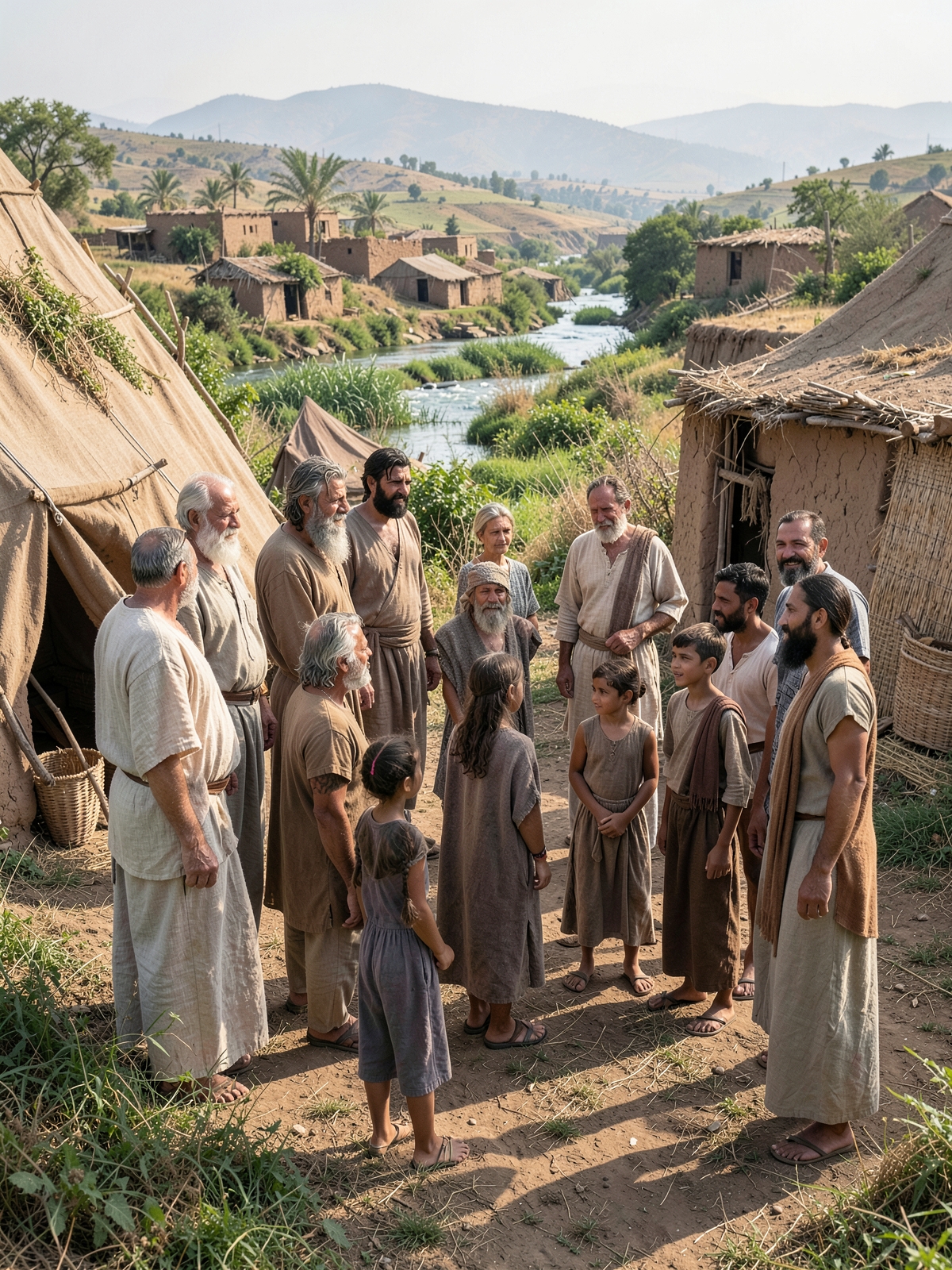
Generated SacraScenes visual interpretation for Genesis 11:10–26. It is not a photograph, archaeological reconstruction or doctrinal authority.
Why the visual is framed this way
The image direction uses a broad multi-generational family settlement rather than portraits labeled with every name. Elders, adults and children across several age groups can occupy an ancient river-valley environment of tents, fields and modest dwellings. Subtle changes in generation and family scale suggest time passing without pretending that one generated face is “the historical Eber” or “the historical Peleg.” No modern ethnic markers or flags appear. The visual goal is genealogical continuity: one line carried through ordinary family life until Terah’s household comes into focus.
Source boundary
The page you are reading is original SacraScenes editorial content. It explains the scene boundary, narrative movement and visual choices without presenting the commentary as Scripture. In the immersive reader, the Story panel remains separate from the Scripture panel, and the public-domain edition is named beneath the source text. This separation lets readers compare the retelling with the source instead of relying on a blended paraphrase.
For Genesis 11, the immersive reader currently uses the public-domain World English Bible (Catholic). Slovenian and German visual scenes remain unavailable until their historical Catholic source text is reviewed. See Sources for attribution and Methodology for the editorial checklist.
Open Genesis 11:10–26 in the immersive reader →Back to all 4 scenes
Editorial scene note updated 24 September 2026.