Genesis 12:10–16 · Genesis 12 scene
Famine and the road to Egypt
The chapter turns abruptly when a severe famine affects the land. Abram goes down to Egypt to stay there because the famine is heavy. As the group approaches Egypt, fear becomes the center of the narrative. Abram tells Sarai that her beauty may cause Egyptian men to kill him while letting her live, so he asks her to say that she is his sister. When they enter Egypt, officials notice Sarai and praise her to Pharaoh. She is taken into Pharaoh’s house, and Abram receives sheep, cattle, donkeys, servants and camels.
What changes in this scene?
SacraScenes does not present Abram’s plan as clever advice for the reader or soften Sarai’s vulnerability. The text itself creates an uncomfortable imbalance: Abram acts out of fear, Sarai is placed at risk, and material benefit comes to Abram while she is taken into Pharaoh’s household. The page therefore resists romanticizing the scene or turning Sarai’s beauty into visual spectacle. It also avoids forcing later legal or moral categories back into every sentence. The editorial task is simpler: show what Abram fears, what he asks Sarai to do, what Pharaoh’s officials do and how the arrangement changes the household’s position.
Read it in the chapter’s flow
Verse 17 interrupts the apparent success of the plan. Pharaoh’s house is struck with serious plagues because of Sarai, and the episode moves rapidly toward confrontation and expulsion. That reversal belongs in a separate scene because the action changes from Abram arranging protection to Pharaoh demanding an explanation. Keeping verses 10–16 together preserves the disturbing tension of the deception before the consequences become visible.
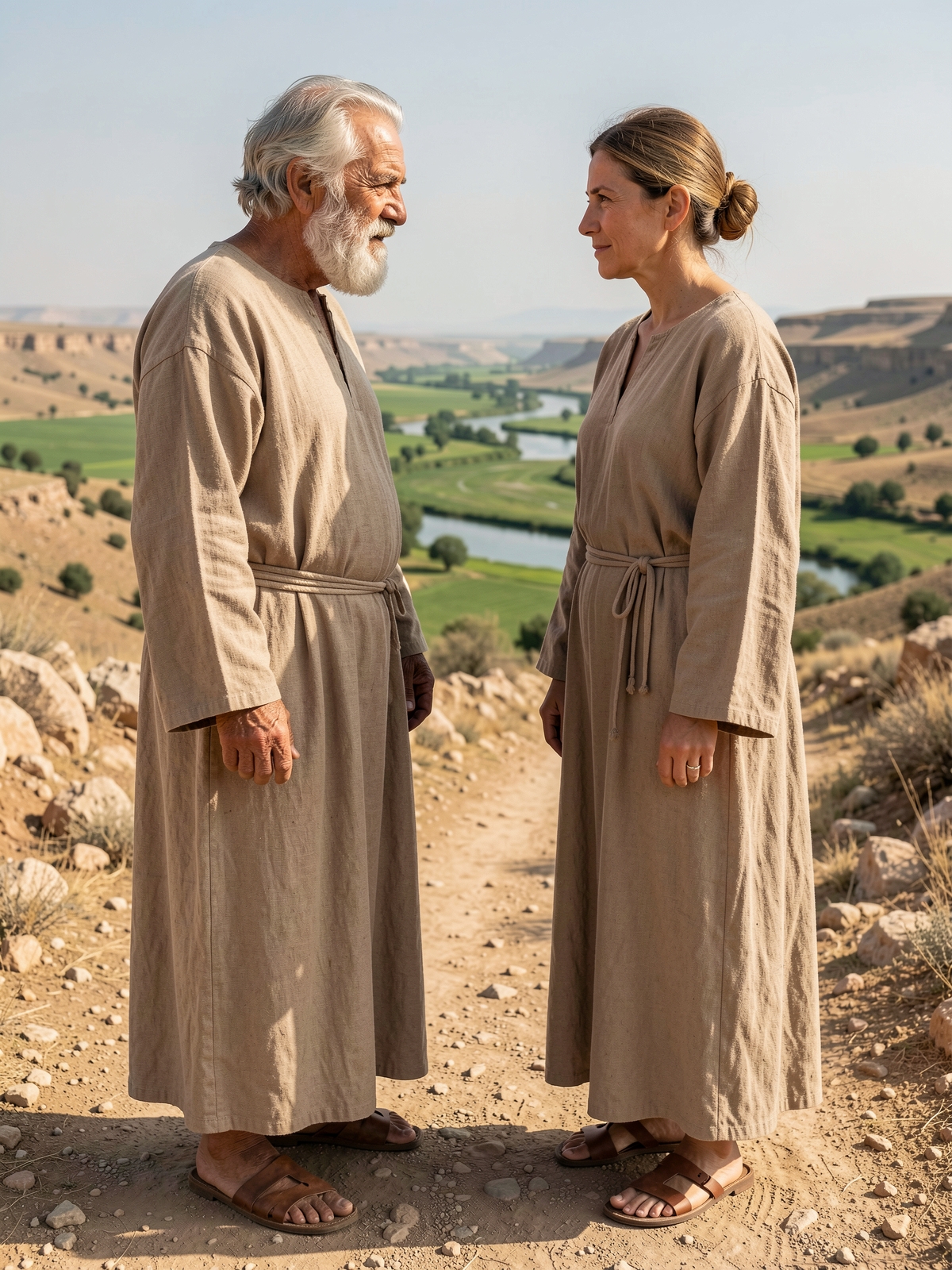
Generated SacraScenes visual interpretation for Genesis 12:10–16. It is not a photograph, archaeological reconstruction or doctrinal authority.
Why the visual is framed this way
The visual direction places Abram and Sarai at the edge of a famine-stricken landscape with the greener Nile environment beginning in the distance. Their conversation is private and serious. Sarai wears a loose, dignified ancient robe and is not sexualized or posed for admiration. A few distant officials or travelers may indicate Egypt ahead, but the image avoids fantasy-palace excess, giant pyramids as shorthand, modern racial coding or glamorous court costume. The focus is the emotional and geographic threshold created by famine and fear.
Source boundary
The page you are reading is original SacraScenes editorial content. It explains the scene boundary, narrative movement and visual choices without presenting the commentary as Scripture. In the immersive reader, the Story panel remains separate from the Scripture panel, and the public-domain edition is named beneath the source text. This separation lets readers compare the retelling with the source instead of relying on a blended paraphrase.
For Genesis 12, the immersive reader currently uses the public-domain World English Bible (Catholic). Slovenian and German visual scenes remain unavailable until their historical Catholic source text is reviewed. See Sources for attribution and Methodology for the editorial checklist.
Open Genesis 12:10–16 in the immersive reader →Back to all 4 scenes
Editorial scene note updated 24 September 2026.