Genesis 12:1–3 · Genesis 12 scene
Go from your country
Genesis 12 opens by moving from Terah’s household to Abram’s personal call. Yahweh tells Abram to leave his country, his relatives and his father’s house and go to a land that will be shown to him. The command is demanding because the destination is not yet named in the speech. At the same time, the passage is crowded with promise: Abram will become a great nation, receive blessing and a great name, become a blessing himself, and stand at the center of blessing for the families of the earth. The scene therefore contains both departure and vocation before any actual road is described.
What changes in this scene?
SacraScenes keeps verses 1–3 together because separating the command from the promises would distort the shape of the call. The text does not present Abram merely as an adventurer choosing a new territory. He is summoned away from familiar social structures, and the promised future is larger than his own security. The final line reaches beyond Abram’s household to the families of the earth. The page does not claim that every later theological question is already fully explained here; it stays close to what these verses actually place together: leaving, promise, blessing and a future not yet visible.
Read it in the chapter’s flow
Verse 4 changes from command to response: Abram actually goes. That movement brings Sarai, Lot, possessions and household members into the story and leads toward Shechem, the promise of land and the building of altars. Ending the first scene at verse 3 preserves the difference between hearing the call and living it out. The immersive reader pairs this editorial framing with the exact World English Bible (Catholic) range so the promises remain visible in their source wording.
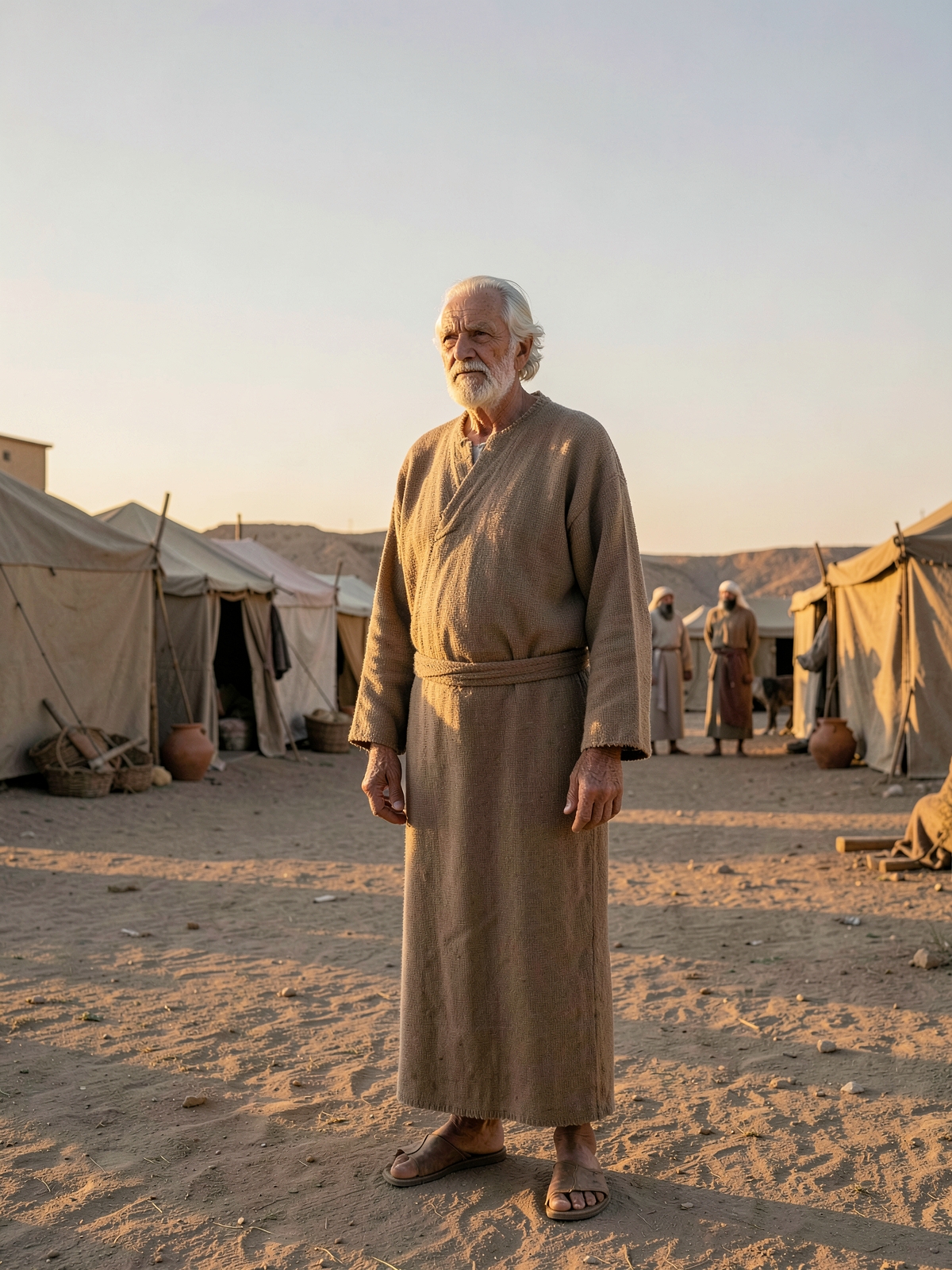
Generated SacraScenes visual interpretation for Genesis 12:1–3. It is not a photograph, archaeological reconstruction or doctrinal authority.
Why the visual is framed this way
The visual direction places Abram in an ancient camp at Haran with the road opening beyond him. Sarai and Lot may be present farther back near tents and pack animals, but the composition keeps Abram as the principal human figure. The divine call is not visualized as a human-shaped God or a glowing person in the sky. Light, distance and Abram’s attentive posture carry the moment instead. Clothing and travel gear are simple ancient materials, with no modern luggage, buckles, roads or architecture.
Source boundary
The page you are reading is original SacraScenes editorial content. It explains the scene boundary, narrative movement and visual choices without presenting the commentary as Scripture. In the immersive reader, the Story panel remains separate from the Scripture panel, and the public-domain edition is named beneath the source text. This separation lets readers compare the retelling with the source instead of relying on a blended paraphrase.
For Genesis 12, the immersive reader currently uses the public-domain World English Bible (Catholic). Slovenian and German visual scenes remain unavailable until their historical Catholic source text is reviewed. See Sources for attribution and Methodology for the editorial checklist.
Open Genesis 12:1–3 in the immersive reader →Back to all 4 scenes
Editorial scene note updated 24 September 2026.