Genesis 13:1–4 · Genesis 13 scene
Back to the place of the altar
Genesis 13 begins with movement away from Egypt rather than with a new command. Abram goes up from Egypt with Sarai, Lot and everything he has. The narrative emphasizes that Abram is now very rich in livestock, silver and gold, then traces the household’s stages through the Negev back toward Bethel. The destination matters because it is the place where Abram had pitched his tent before, between Bethel and Ai, and where he had made an altar. The return ends with Abram calling on Yahweh’s name there again.
What changes in this scene?
SacraScenes keeps verses 1–4 together because they function as a deliberate return. The Egypt episode of Genesis 12 does not simply vanish; Abram leaves with his household and possessions and retraces the route into Canaan. The text places material wealth beside renewed worship without claiming that wealth itself proves divine approval of every prior action. Returning to the altar also restores geographic continuity before the story introduces the practical problem created by two wealthy pastoral households occupying the same land.
Read it in the chapter’s flow
Verse 5 shifts attention from Abram’s return to Lot’s own wealth in flocks, herds and tents. The combined abundance creates a land-use problem, and the next scene is about conflict between herdsmen and Abram’s proposal to separate. Ending the return scene at verse 4 preserves the contrast between restored worship and the new practical tension that immediately follows.
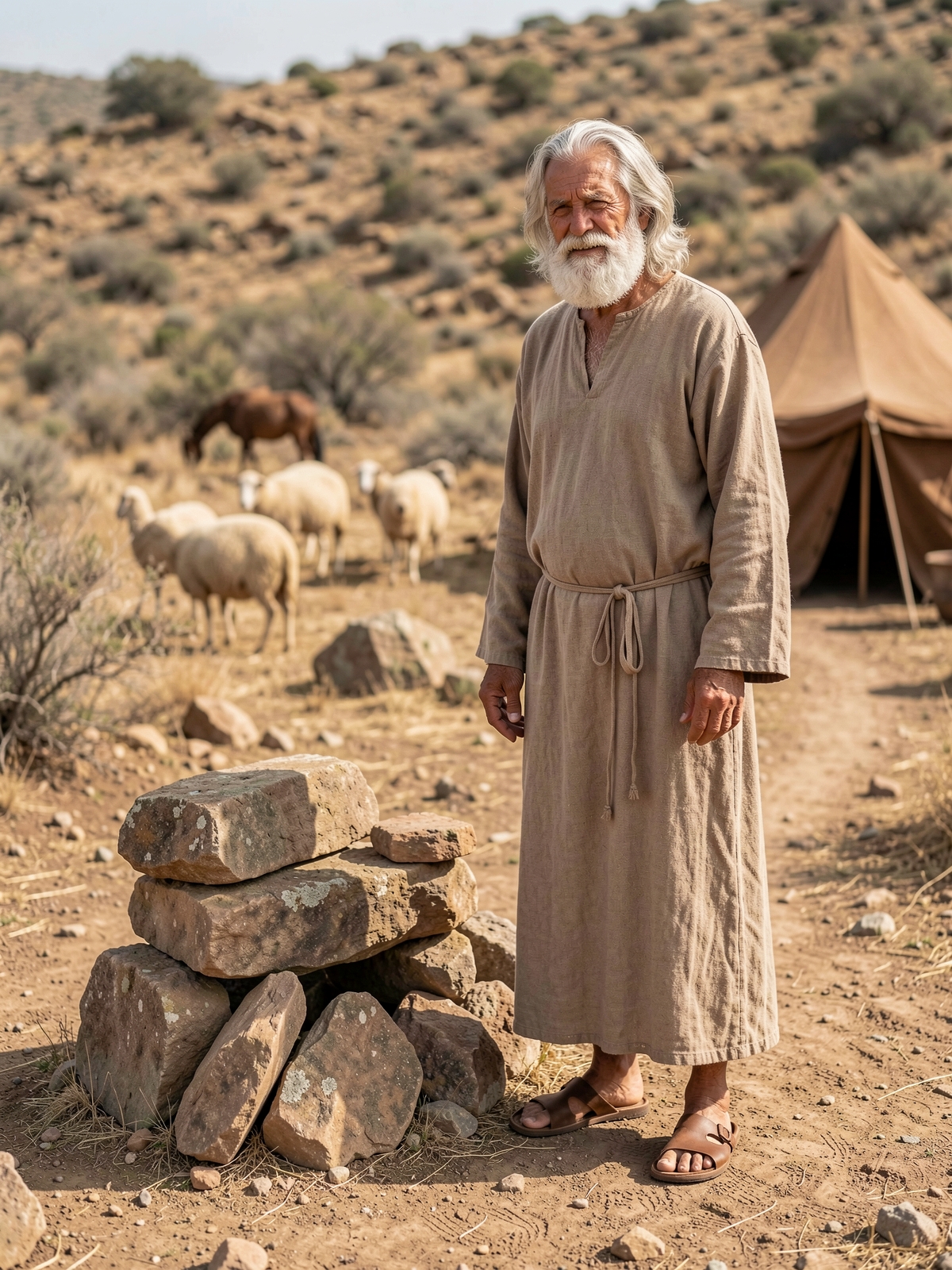
Generated SacraScenes visual interpretation for Genesis 13:1–4. It is not a photograph, archaeological reconstruction or doctrinal authority.
Why the visual is framed this way
The visual direction shows a moving pastoral household rather than a victory procession. Abram is clearly elderly, Sarai and Lot belong to the larger caravan, and flocks, tents and simple pack animals communicate the scale of the household. The dry Negev and hill country lead toward a small rough-stone altar in the distance. There are no modern wagons, metal buckles, pockets, wristwear or travel gear, and the scene does not present Canaan as an empty untouched landscape.
Source boundary
The page you are reading is original SacraScenes editorial content. It explains the scene boundary, narrative movement and visual choices without presenting the commentary as Scripture. In the immersive reader, the Story panel remains separate from the Scripture panel, and the public-domain edition is named beneath the source text. This separation lets readers compare the retelling with the source instead of relying on a blended paraphrase.
For Genesis 13, the immersive reader currently uses the public-domain World English Bible (Catholic). Slovenian and German visual scenes remain unavailable until their historical Catholic source text is reviewed. See Sources for attribution and Methodology for the editorial checklist.
Open Genesis 13:1–4 in the immersive reader →Back to all 4 scenes
Editorial scene note updated 24 September 2026.