Genesis 13:10–13 · Genesis 13 scene
Lot chooses the Jordan plain
Lot surveys the Jordan plain and sees that it is well watered. Genesis compares its fertility to the garden of Yahweh and the land of Egypt before the destruction of Sodom and Gomorrah. Lot chooses the whole plain, travels east and separates from Abram. The narrative then contrasts their locations: Abram remains in the land of Canaan, while Lot lives among the cities of the plain and moves his tents as far as Sodom.
What changes in this scene?
SacraScenes keeps verses 10–13 together because the visual attractiveness of the land and the moral warning about Sodom belong side by side. Lot’s choice makes practical sense from the perspective of water and pasture, but the narrative immediately tells the reader something about the city toward which he moves. The editorial layer therefore avoids treating the Jordan plain as either obviously evil terrain or a glamorous prize. The tension is produced by what Lot can see and what the narrator tells the reader.
Read it in the chapter’s flow
After Lot leaves, the narrative returns fully to Abram. Verses 14–18 renew the land promise, tell Abram to look in every direction and walk through the land, and end with tents by the oaks of Mamre and another altar. That renewed promise is best treated as the chapter’s final scene because it deliberately follows the separation.
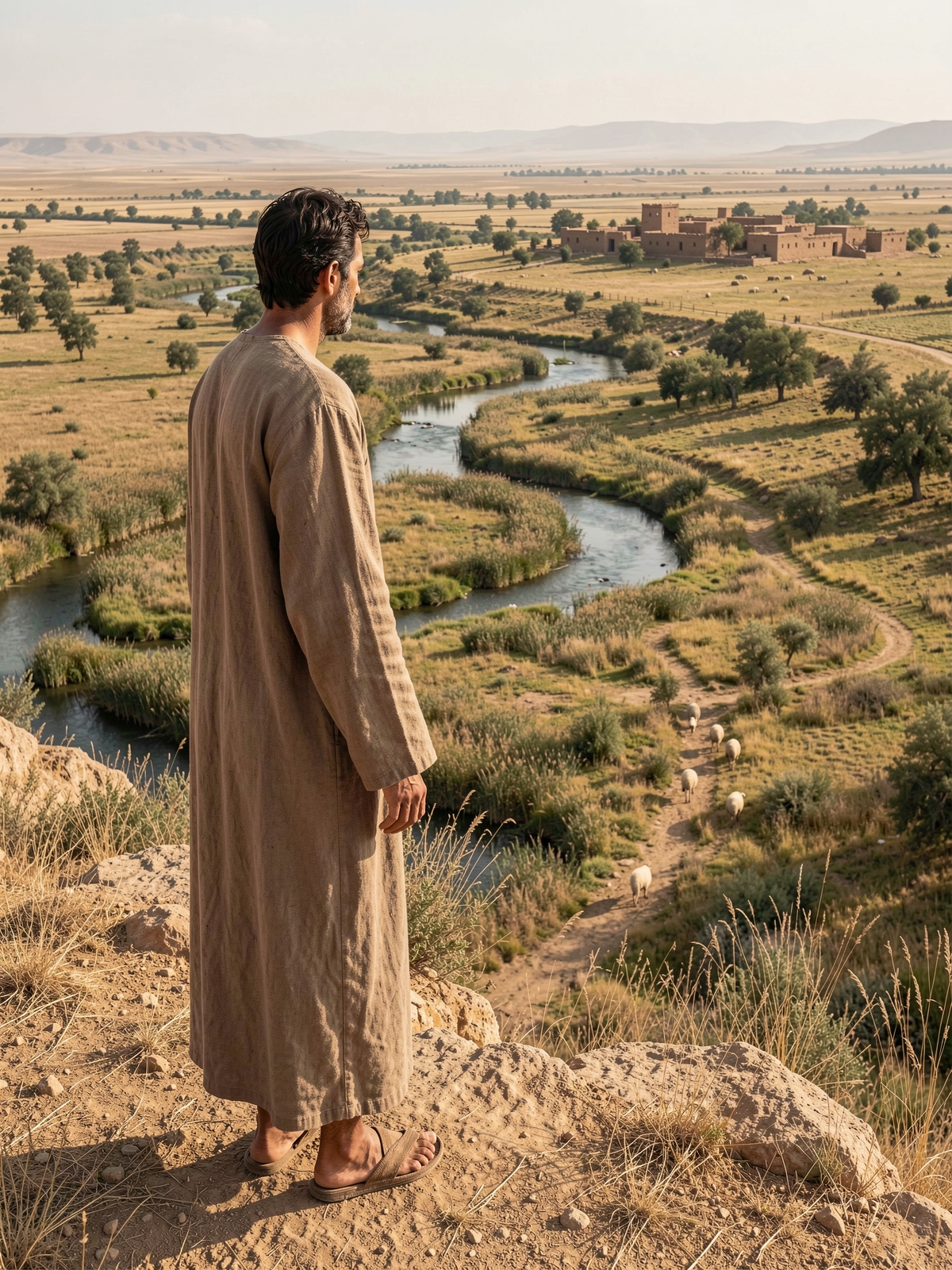
Generated SacraScenes visual interpretation for Genesis 13:10–13. It is not a photograph, archaeological reconstruction or doctrinal authority.
Why the visual is framed this way
The visual direction places Lot on a ridge looking down into a green river valley while his household and flocks begin descending behind him. Sodom remains a small distant ancient settlement rather than a fantasy metropolis. The scene should not imply that Lot is already living in luxury inside the city. Ancient tents, animals and footpaths keep the household mobile, while the contrast between dry ridge and fertile plain explains the choice without requiring labels or a map.
Source boundary
The page you are reading is original SacraScenes editorial content. It explains the scene boundary, narrative movement and visual choices without presenting the commentary as Scripture. In the immersive reader, the Story panel remains separate from the Scripture panel, and the public-domain edition is named beneath the source text. This separation lets readers compare the retelling with the source instead of relying on a blended paraphrase.
For Genesis 13, the immersive reader currently uses the public-domain World English Bible (Catholic). Slovenian and German visual scenes remain unavailable until their historical Catholic source text is reviewed. See Sources for attribution and Methodology for the editorial checklist.
Open Genesis 13:10–13 in the immersive reader →Back to all 4 scenes
Editorial scene note updated 24 September 2026.