Genesis 14:21–24 · Genesis 14 scene
Abram refuses the spoils
After Melchizedek’s blessing, the king of Sodom tells Abram to give him the people and keep the goods. Abram answers with an oath to Yahweh, God Most High, and refuses to take anything for himself. His language is deliberately absolute: he will not take from a thread to a sandal strap, because he does not want the king of Sodom to be able to say that he made Abram rich. The answer is not a blanket rejection of everyone else’s claim. Abram excludes what the young men have eaten and explicitly says that Aner, Eshcol and Mamre should take their own portions.
What changes in this scene?
SacraScenes treats the scene as a refusal of personal profit rather than as a performance of poverty. Abram has already been described as wealthy in Genesis 13, so the issue is not that possessions are automatically wrong. The stated concern is the source and meaning of this particular enrichment. The distinction about his allies also matters: Abram does not use his own oath to erase what belongs to other participants. Keeping those details together prevents the episode from becoming a slogan detached from the actual exchange.
Read it in the chapter’s flow
Genesis 15 changes register again. Abram receives a vision in which fear, reward, heirship, descendants and covenant move to the center of the story. Genesis 14 therefore ends with a useful contrast: Abram has recovered goods and people through force but refuses to let the king of Sodom define his prosperity. The next chapter will take up the question of what Abram can expect from God. Ending here lets that transition remain visible.
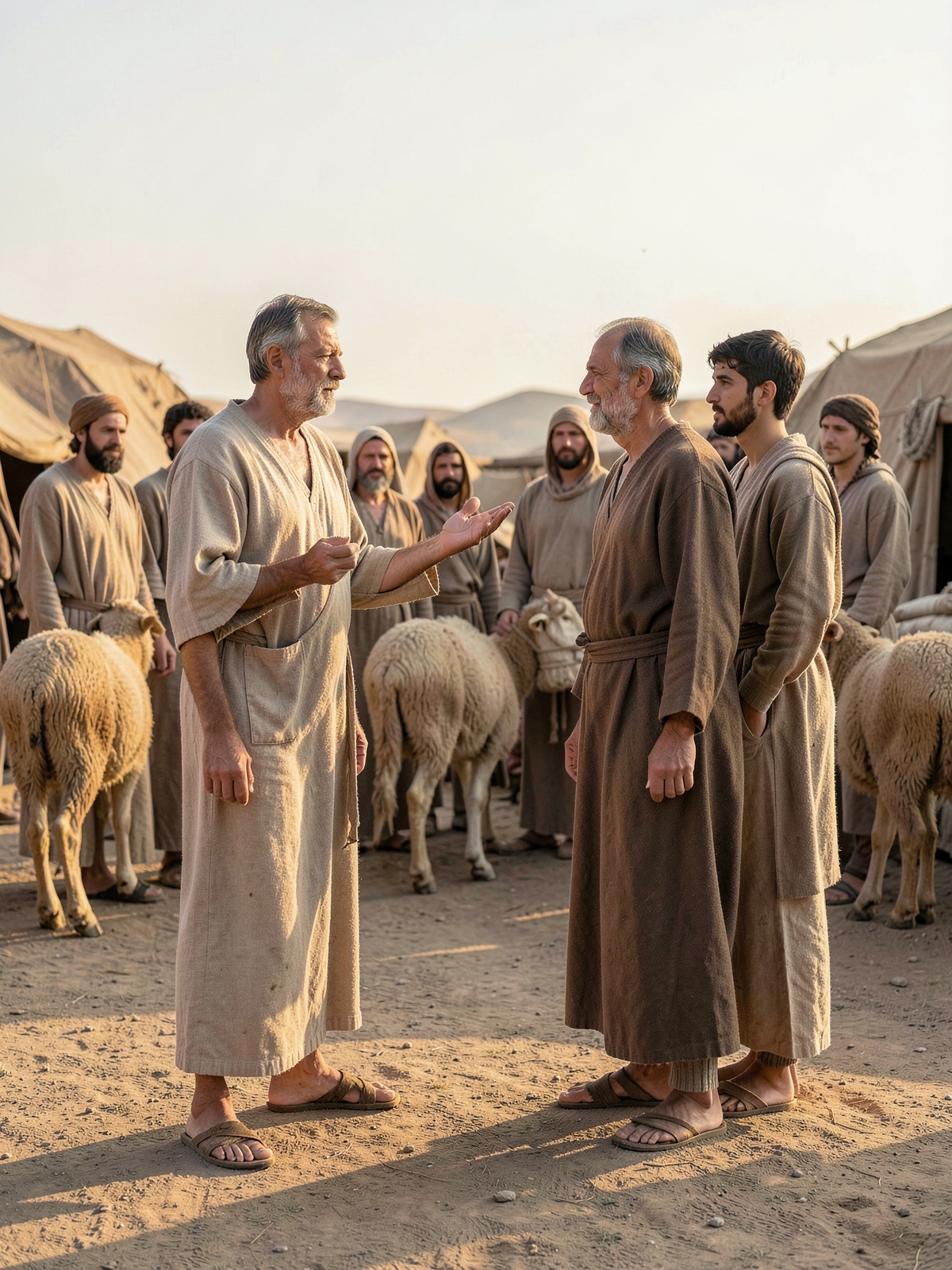
Generated SacraScenes visual interpretation for Genesis 14:21–24. It is not a photograph, archaeological reconstruction or doctrinal authority.
Why the visual is framed this way
The image shows Abram and the king of Sodom standing in an open ancient encampment with recovered people, animals, textiles and ordinary household bundles behind them. Abram’s open raised hand signals refusal without becoming a theatrical pose. The king is dignified but restrained, with no fantasy throne or crown. Allies and young men can remain nearby. There are no heaps of minted gold coins, treasure chests, contracts, handshakes, Roman armor or modern commercial imagery. The material goods should look like the possessions of ancient households, not a pirate hoard.
Source boundary
The page you are reading is original SacraScenes editorial content. It explains the scene boundary, narrative movement and visual choices without presenting the commentary as Scripture. In the immersive reader, the Story panel remains separate from the Scripture panel, and the public-domain edition is named beneath the source text. This separation lets readers compare the retelling with the source instead of relying on a blended paraphrase.
For Genesis 14, the immersive reader currently uses the public-domain World English Bible (Catholic). Slovenian and German visual scenes remain unavailable until their historical Catholic source text is reviewed. See Sources for attribution and Methodology for the editorial checklist.
Open Genesis 14:21–24 in the immersive reader →Back to all 4 scenes
Editorial scene note updated 24 September 2026.