Genesis 14:17–20 · Genesis 14 scene
Melchizedek blesses Abram
Abram returns after defeating the raiding coalition, and the king of Sodom comes out to meet him in the Valley of Shaveh. Into that return scene comes Melchizedek, identified in Genesis with two titles: king of Salem and priest of God Most High. He brings bread and wine and speaks a blessing over Abram. The blessing names God Most High as possessor or creator of heaven and earth and praises God for delivering Abram’s enemies into his hand. Abram then gives Melchizedek a tenth of everything.
What changes in this scene?
Later biblical and Christian texts give Melchizedek major theological significance, but this Genesis page does not collapse those later interpretations back into the image. SacraScenes first lets Genesis 14 say what it actually says: Melchizedek is a king, a priest, a bearer of bread and wine, a speaker of blessing and the recipient of a tenth. That is already distinctive without adding a halo, cross, Mass vestments or identifying his face with Jesus. Readers can encounter later interpretation in its own textual context rather than through an anachronistic generated picture.
Read it in the chapter’s flow
The king of Sodom speaks directly in verse 21 and makes Abram an offer: return the people and keep the goods. Abram’s reply gives the chapter its final ethical turn. He refuses personal enrichment so that the king cannot claim to have made him rich, while protecting what his allies are entitled to receive. That exchange deserves a final scene rather than being squeezed under Melchizedek’s blessing.
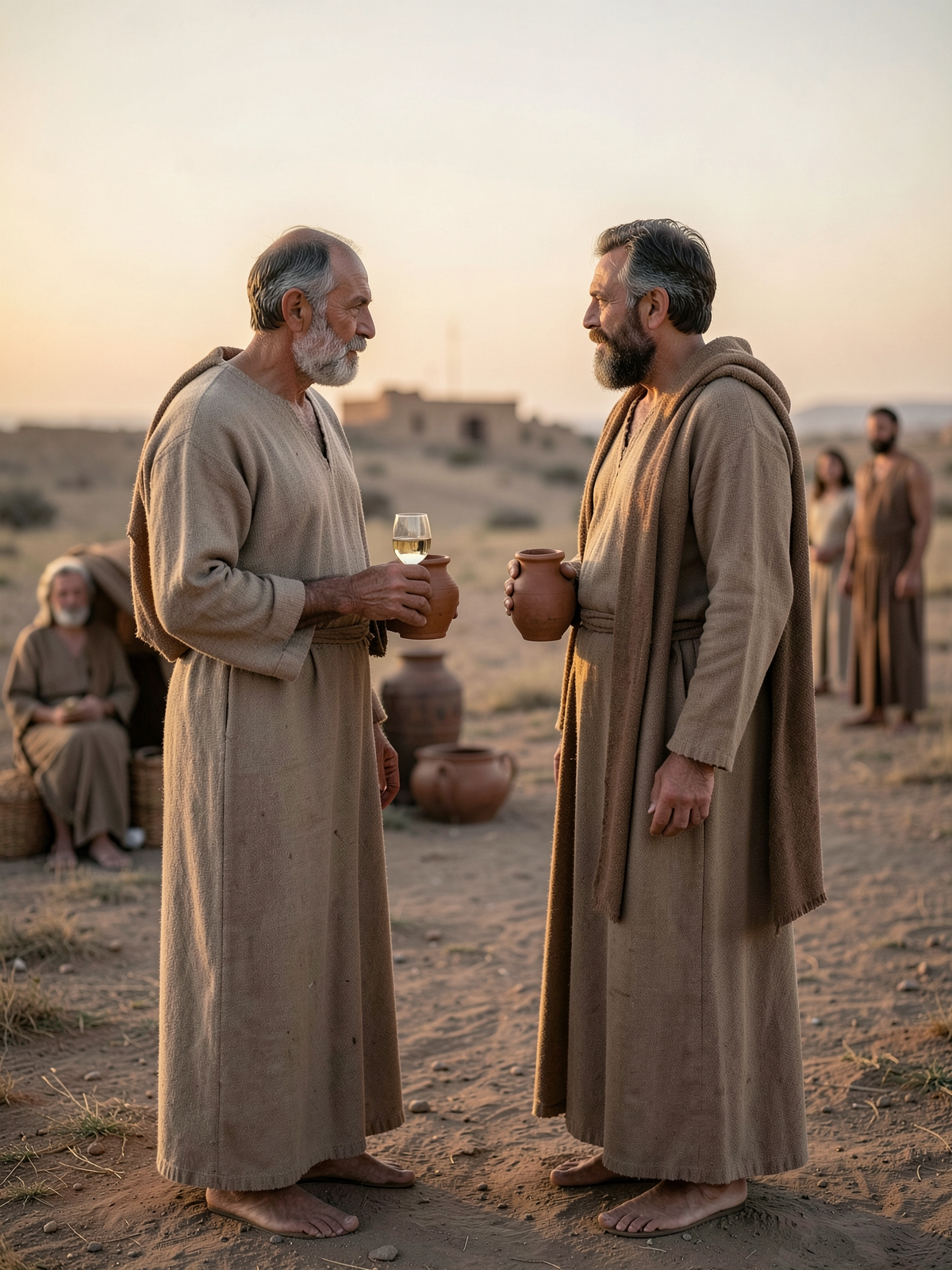
Generated SacraScenes visual interpretation for Genesis 14:17–20. It is not a photograph, archaeological reconstruction or doctrinal authority.
Why the visual is framed this way
The visual direction shows an outdoor ancient meeting. Melchizedek wears a dignified but simple long Near Eastern robe and mantle and brings ordinary bread and wine in clay vessels. Abram stands opposite him respectfully. Recovered goods and a distant delegation may establish the return from conflict, but the scene remains quiet. There is no church interior, gold chalice, monstrance, cross, bishop’s mitre, medieval crown or later Christian priestly costume. The image is intended to preserve the strangeness and simplicity of the Genesis encounter rather than illustrate a later painting tradition.
Source boundary
The page you are reading is original SacraScenes editorial content. It explains the scene boundary, narrative movement and visual choices without presenting the commentary as Scripture. In the immersive reader, the Story panel remains separate from the Scripture panel, and the public-domain edition is named beneath the source text. This separation lets readers compare the retelling with the source instead of relying on a blended paraphrase.
For Genesis 14, the immersive reader currently uses the public-domain World English Bible (Catholic). Slovenian and German visual scenes remain unavailable until their historical Catholic source text is reviewed. See Sources for attribution and Methodology for the editorial checklist.
Open Genesis 14:17–20 in the immersive reader →Back to all 4 scenes
Editorial scene note updated 24 September 2026.