Genesis 17:1–8 · Genesis 17 scene
Abram becomes Abraham
The passage moves from command to identity and promise. Abraham falls facedown, and the promise expands toward nations, kings and the land without requiring a human-shaped depiction of God.
What changes in this scene?
The image uses Abraham’s posture, open landscape and light to mark the encounter. It avoids halos, divine portraiture and theatrical magic effects.
Read it in the chapter’s flow
The name change is part of the covenant movement rather than a decorative detail. Reading the source beside the visual keeps the sequence—command, posture, new name, promise—clear.
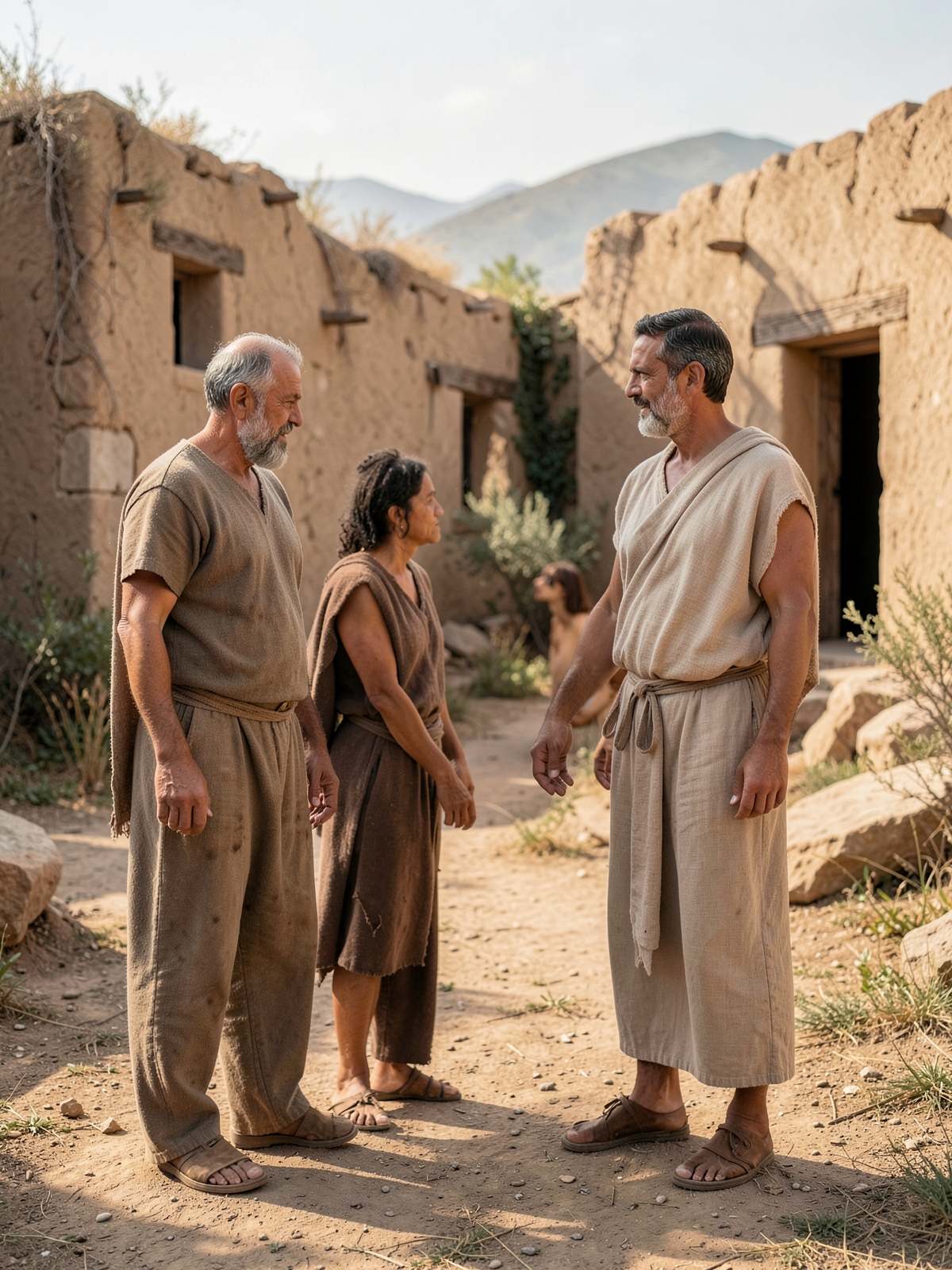
Generated SacraScenes visual interpretation for Genesis 17:1–8. It is not a photograph, archaeological reconstruction or doctrinal authority.
Why the visual is framed this way
Verses 9–14 turn from Abraham’s new name to the covenant sign required of the males in his household and future generations.
Reading this scene carefully
Elderly Abraham bowing on open ancient ground near tents, receiving a covenant encounter through light and posture without showing God as a human figure.
Source boundary
The page you are reading is original SacraScenes editorial content. It explains the scene boundary, narrative movement and visual choices without presenting the commentary as Scripture. In the immersive reader, the Story panel remains separate from the Scripture panel, and the public-domain edition is named beneath the source text. This separation lets readers compare the retelling with the source instead of relying on a blended paraphrase.
For Genesis 17, the immersive reader currently uses the public-domain World English Bible (Catholic). Slovenian and German visual scenes remain unavailable until their historical Catholic source text is reviewed. See Sources for attribution and Methodology for the editorial checklist.
Open Genesis 17:1–8 in the immersive reader →Back to all 4 scenes
Editorial scene note updated 28 September 2026.