Genesis 26:12–22 · Genesis 26 scene
Disputed wells and room to live
The sequence of Esek, Sitnah and Rehoboth is one movement of pressure and relocation. SacraScenes emphasizes water access and repeated movement rather than inventing pitched battles.
What changes in this scene?
The visual shows herders at a newly opened stone-lined well while Isaac’s household prepares to move again, with another distant well suggesting the repeated pattern.
Read it in the chapter’s flow
The names given to the wells interpret the sequence inside the text itself: contention, hostility and finally room. The visual supports that progression without modern property markers.
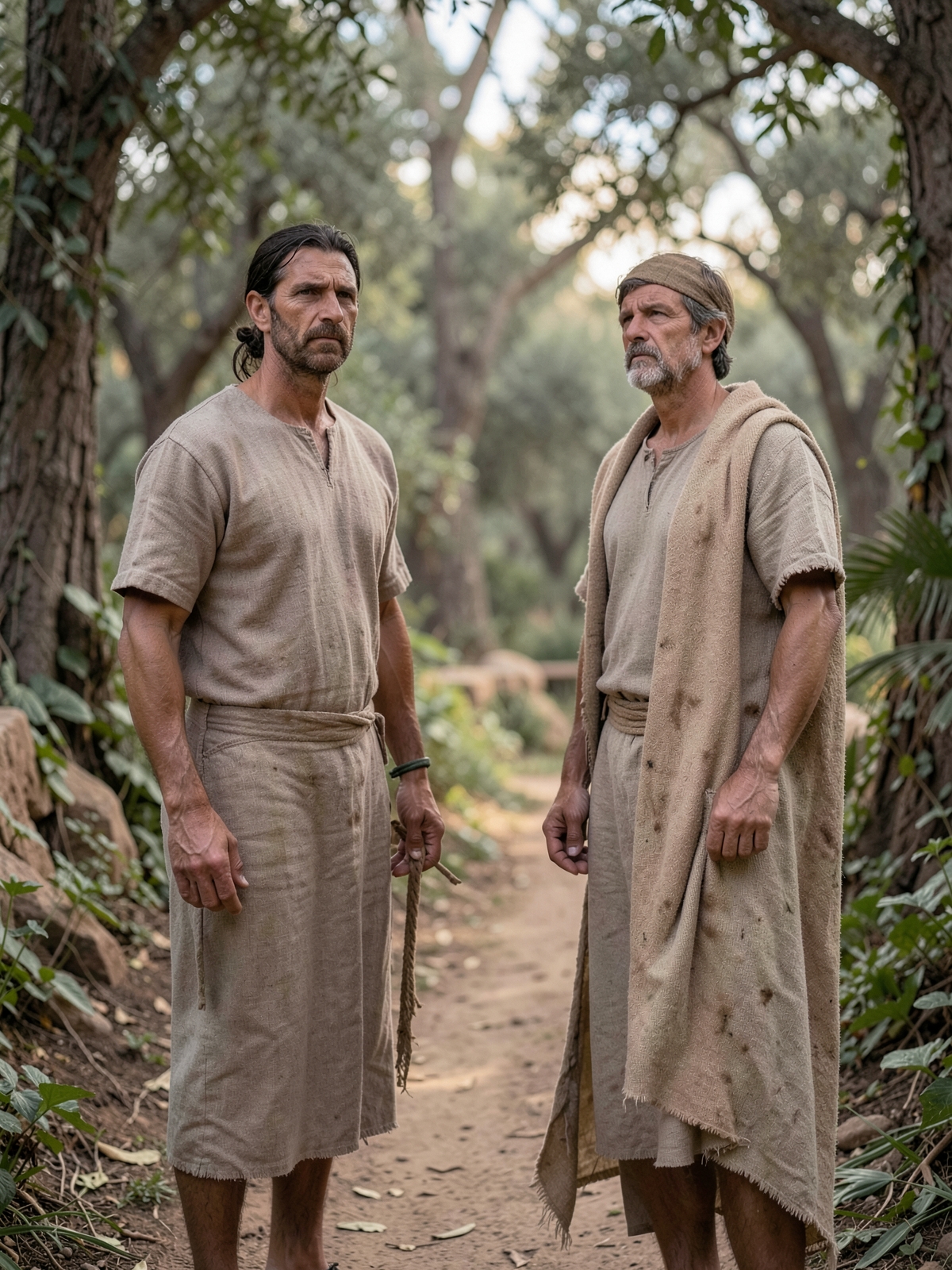
Generated SacraScenes visual interpretation for Genesis 26:12–22. It is not a photograph, archaeological reconstruction or doctrinal authority.
Why the visual is framed this way
At Beersheba the conflict cycle pauses and the next section centers on divine reassurance, an altar and a settled camp.
Reading this scene carefully
Isaac and shepherds beside a newly dug ancient well as rival herders argue at a respectful distance, livestock and tents ready to move across a dry landscape.
Source boundary
The page you are reading is original SacraScenes editorial content. It explains the scene boundary, narrative movement and visual choices without presenting the commentary as Scripture. In the immersive reader, the Story panel remains separate from the Scripture panel, and the public-domain edition is named beneath the source text. This separation lets readers compare the retelling with the source instead of relying on a blended paraphrase.
For Genesis 26, the immersive reader currently uses the public-domain World English Bible (Catholic). Slovenian and German visual scenes remain unavailable until their historical Catholic source text is reviewed. See Sources for attribution and Methodology for the editorial checklist.
Open Genesis 26:12–22 in the immersive reader →Back to all 4 scenes
Editorial scene note updated 28 September 2026.