Genesis 28:10–17 · Genesis 28 scene
Jacob’s dream at Bethel
The promise spoken in the dream connects Jacob with Abraham and Isaac, while the vision assures him of presence during exile. SacraScenes keeps the heavenly imagery symbolic and text-led.
What changes in this scene?
The image shows sleeping Jacob in an open landscape beneath a luminous stair-like path rising into the night sky, with distant messenger figures rather than a literal heavenly building.
Read it in the chapter’s flow
The visual is an interpretation of dream language, not a map of heaven. The source text remains the primary place for the promise, the messenger movement and Jacob’s reaction.
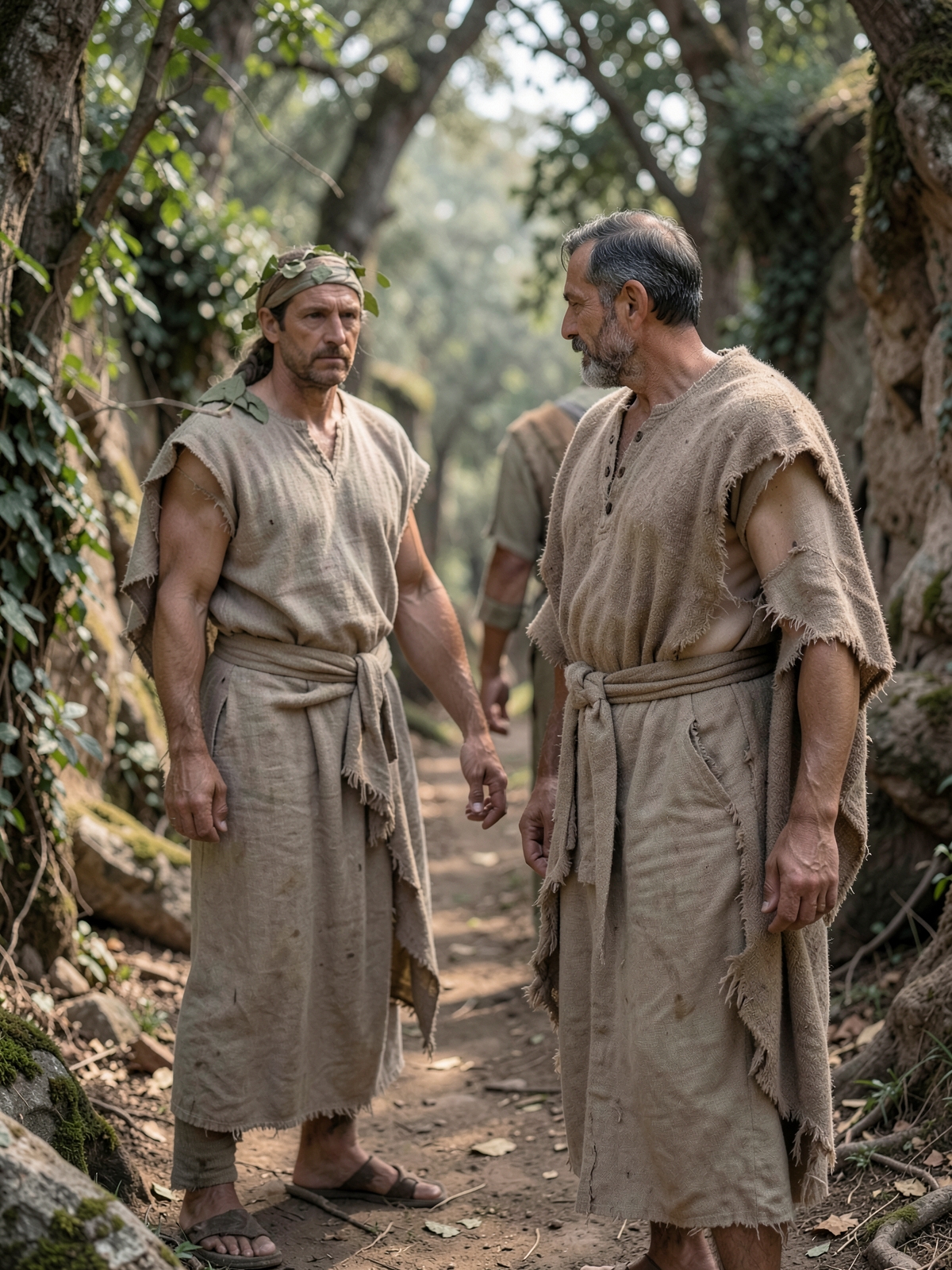
Generated SacraScenes visual interpretation for Genesis 28:10–17. It is not a photograph, archaeological reconstruction or doctrinal authority.
Why the visual is framed this way
Jacob wakes in awe and fear, names the place as the house of God and then marks it physically the next morning.
Reading this scene carefully
Adult Jacob asleep alone on stony ground under a vast night sky, a restrained luminous stair-like path rising upward with small distant messenger figures, no palace in the clouds.
Source boundary
The page you are reading is original SacraScenes editorial content. It explains the scene boundary, narrative movement and visual choices without presenting the commentary as Scripture. In the immersive reader, the Story panel remains separate from the Scripture panel, and the public-domain edition is named beneath the source text. This separation lets readers compare the retelling with the source instead of relying on a blended paraphrase.
For Genesis 28, the immersive reader currently uses the public-domain World English Bible (Catholic). Slovenian and German visual scenes remain unavailable until their historical Catholic source text is reviewed. See Sources for attribution and Methodology for the editorial checklist.
Open Genesis 28:10–17 in the immersive reader →Back to all 4 scenes
Editorial scene note updated 28 September 2026.