Genesis 3:8–13 · Genesis 3 scene
Where are you?
After the fruit is eaten, the story becomes a scene of hiding and questioning. The man and woman hear God in the garden and conceal themselves among the trees. The question “Where are you?” draws the man into speech. He explains that he was afraid because he was naked. Further questions bring the forbidden tree back into view, and responsibility begins to move from one person to another: the man points to the woman, and the woman points to the serpent. What was open at the end of Genesis 2 has become fear, concealment and blame.
What changes in this scene?
SacraScenes treats verses 8–13 as one scene because the questions form a single conversation. The editorial layer does not try to define how God’s presence in the garden should be physically imagined, nor does it create a human-shaped portrait of God. Instead it follows what the dialogue reveals about the humans: they hide, fear being seen, acknowledge the command has been crossed and resist holding the entire action in their own hands. The scene boundary closes just before the consequences are pronounced.
Read it in the chapter’s flow
The next passage changes from questions to consequences. Genesis 3:14 begins with the serpent, then addresses the woman and the man in turn. Keeping that judgment sequence separate allows the reader to notice that verses 8–13 are still diagnostic: they expose what has happened and how the humans respond when asked. The immersive reader loads Genesis 3:8–13 directly from the public-domain English Catholic source, maintaining the project’s boundary between Scripture, SacraScenes Story text and generated imagery.
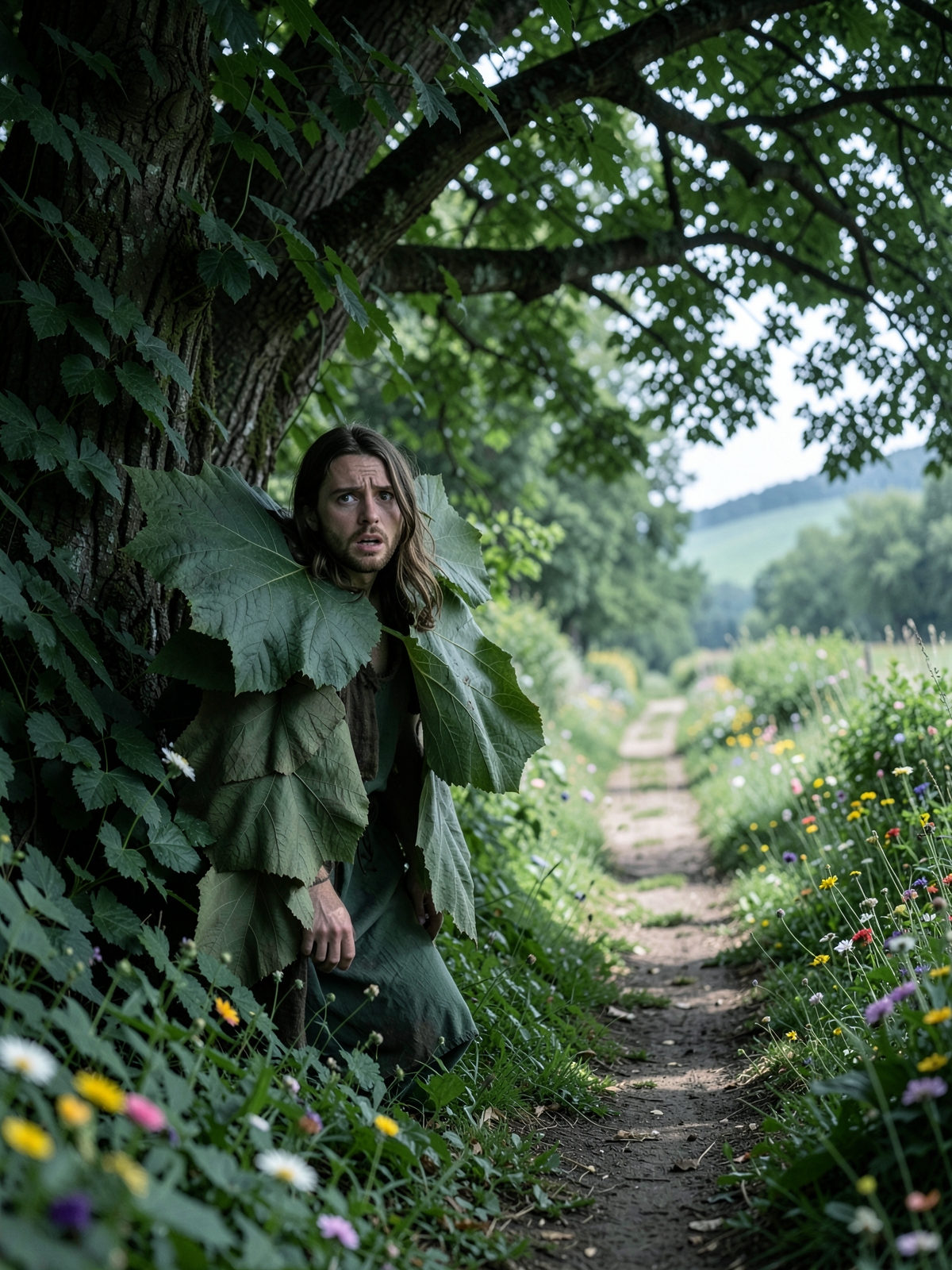
Generated SacraScenes visual interpretation for Genesis 3:8–13. It is not a photograph, archaeological reconstruction or doctrinal authority.
Why the visual is framed this way
The visual uses trees, late-day light and partially concealed adult figures to communicate hiding without depicting God. Adam and Eve remain fully modestly covered with foliage or their improvised leaf coverings. An empty path, shifting light or the pair’s attention toward something outside the frame can suggest that they hear a presence without giving that presence a generated human face. The goal is psychological clarity—fear and concealment in a garden that had previously been a place of openness—rather than supernatural spectacle.
Source boundary
The page you are reading is original SacraScenes editorial content. It explains the scene boundary, narrative movement and visual choices without presenting the commentary as Scripture. In the immersive reader, the Story panel remains separate from the Scripture panel, and the public-domain edition is named beneath the source text. This separation lets readers compare the retelling with the source instead of relying on a blended paraphrase.
For Genesis 3, the immersive reader currently uses the public-domain World English Bible (Catholic). Slovenian and German visual scenes remain unavailable until their historical Catholic source text is reviewed. See Sources for attribution and Methodology for the editorial checklist.
Open Genesis 3:8–13 in the immersive reader →Back to all 5 scenes
Editorial scene note updated 24 September 2026.