Genesis 4:17–24 · Genesis 4 scene
A city, crafts and a violent boast
Genesis 4 shifts from the solitary fugitive to a growing family line. Cain has a son and builds a city. The genealogy then names descendants connected with different forms of human culture: living with livestock, playing stringed instruments and pipes, and forging tools from bronze and iron. The passage is not simply a list of names. It sketches a world becoming more settled and technically capable. Yet the sequence closes not with a celebration of progress, but with Lamech addressing his wives in the language of killing and multiplied vengeance.
What changes in this scene?
SacraScenes keeps verses 17–24 as one scene because the contrast inside the genealogy is the point worth seeing. Settlement, craft and music grow alongside a boast that intensifies the vengeance language connected with Cain. The editorial layer does not imply that cities, music or metalworking cause violence; the text places cultural creativity and moral disorder in the same expanding human world. Preserving that tension is more faithful than splitting the crafts into feel-good mini-scenes and isolating Lamech as if he belonged to a different narrative.
Read it in the chapter’s flow
The Cainite genealogy ends with Lamech’s speech, but Genesis 4 has two verses left. The text returns to Adam and Eve, the birth of Seth, then to Seth’s son Enosh and the beginning of calling on the name of Yahweh. That final shift deserves its own short scene because it deliberately changes family line and tone. The exact Scripture in the reader remains separately sourced, while this page explains why SacraScenes treats cultural development and Lamech’s boast as a single narrative unit.
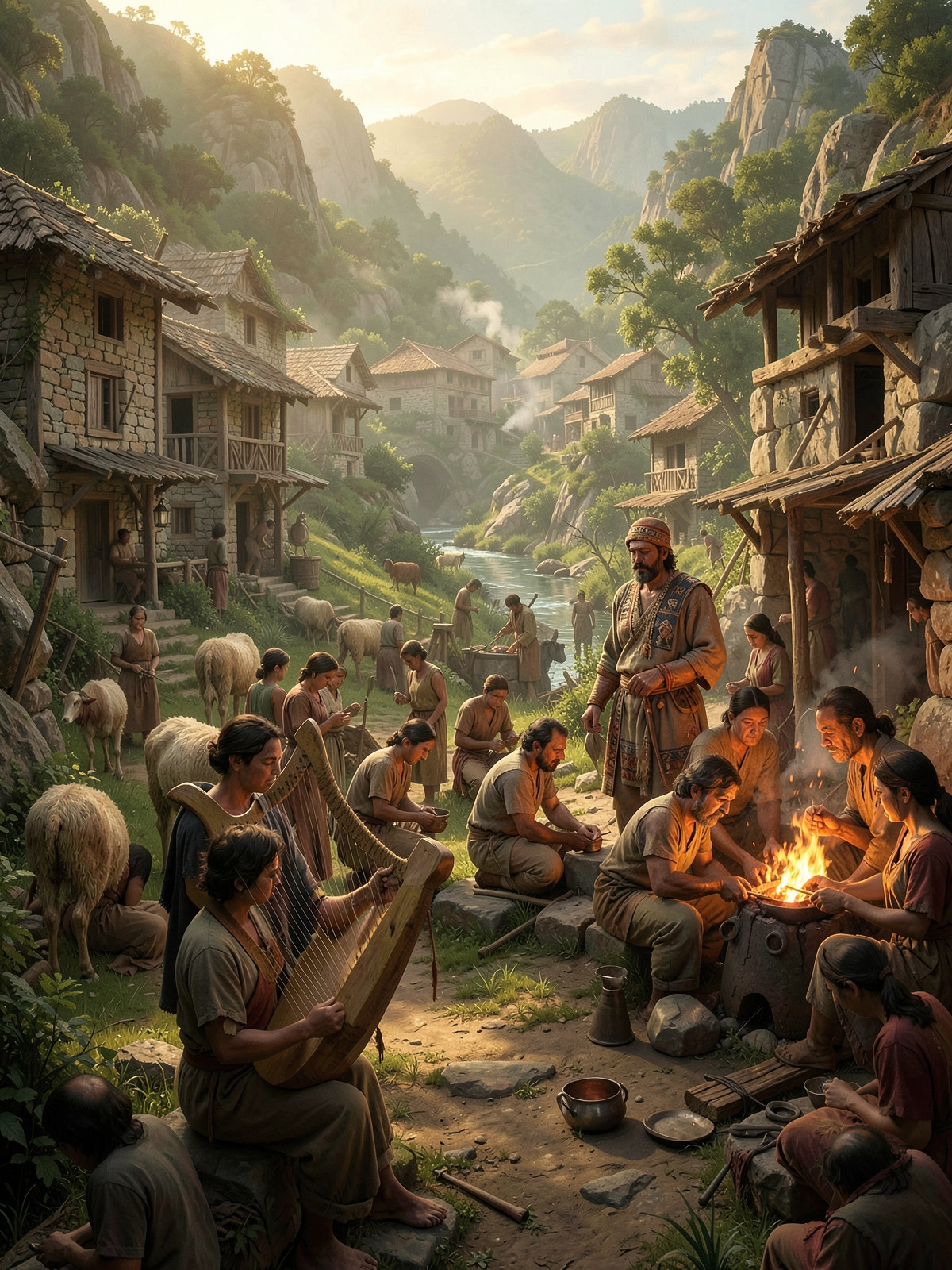
Generated SacraScenes visual interpretation for Genesis 4:17–24. It is not a photograph, archaeological reconstruction or doctrinal authority.
Why the visual is framed this way
The image direction centers on an early ancient settlement rather than on Lamech’s killing. Stone and timber dwellings, livestock, a simple stringed instrument and a working forge can make the named developments visible in one coherent environment. Lamech may appear as one adult figure within that world, but the image avoids showing another violent act. A subtle unease in posture or atmosphere is enough to keep the final lines from disappearing behind the visual interest of the city and crafts. No modern technology or architecture should enter the scene.
Source boundary
The page you are reading is original SacraScenes editorial content. It explains the scene boundary, narrative movement and visual choices without presenting the commentary as Scripture. In the immersive reader, the Story panel remains separate from the Scripture panel, and the public-domain edition is named beneath the source text. This separation lets readers compare the retelling with the source instead of relying on a blended paraphrase.
For Genesis 4, the immersive reader currently uses the public-domain World English Bible (Catholic). Slovenian and German visual scenes remain unavailable until their historical Catholic source text is reviewed. See Sources for attribution and Methodology for the editorial checklist.
Open Genesis 4:17–24 in the immersive reader →Back to all 4 scenes
Editorial scene note updated 24 September 2026.