Genesis 4:8–16 · Genesis 4 scene
Your brother's blood
The warning of the previous scene is followed by action. Cain speaks with Abel, and while they are in the field Cain rises against his brother and kills him. The text then returns to the language of questioning familiar from Genesis 3. Cain is asked where Abel is. His answer—“Am I my brother’s keeper?”—attempts to push away responsibility, but the passage describes Abel’s blood as crying from the ground. Cain’s relationship with the soil he worked is altered, and he is told that he will become a fugitive and wanderer.
What changes in this scene?
This scene continues beyond the sentence on Cain because the passage does not leave him only with punishment. Cain fears that anyone who finds him will kill him. The response limits that spiral of retaliation: a mark is placed on Cain so that he will not be killed by whoever encounters him. SacraScenes therefore keeps verses 8–16 together as one movement from violence to questioning, consequence, fear and protection. The scene does not excuse Cain’s act, but neither does it omit the boundary placed around further vengeance.
Read it in the chapter’s flow
Verse 17 changes both pace and subject. Cain’s life continues, a son is born and a city is built; the passage then traces descendants associated with livestock, music and metalworking before reaching Lamech’s violent boast. That makes Genesis 4:8–16 a complete exile scene. The reader can compare this editorial synthesis with the exact WEBC Scripture range, preserving the distinction between what Genesis says and how SacraScenes visually organizes the sequence.
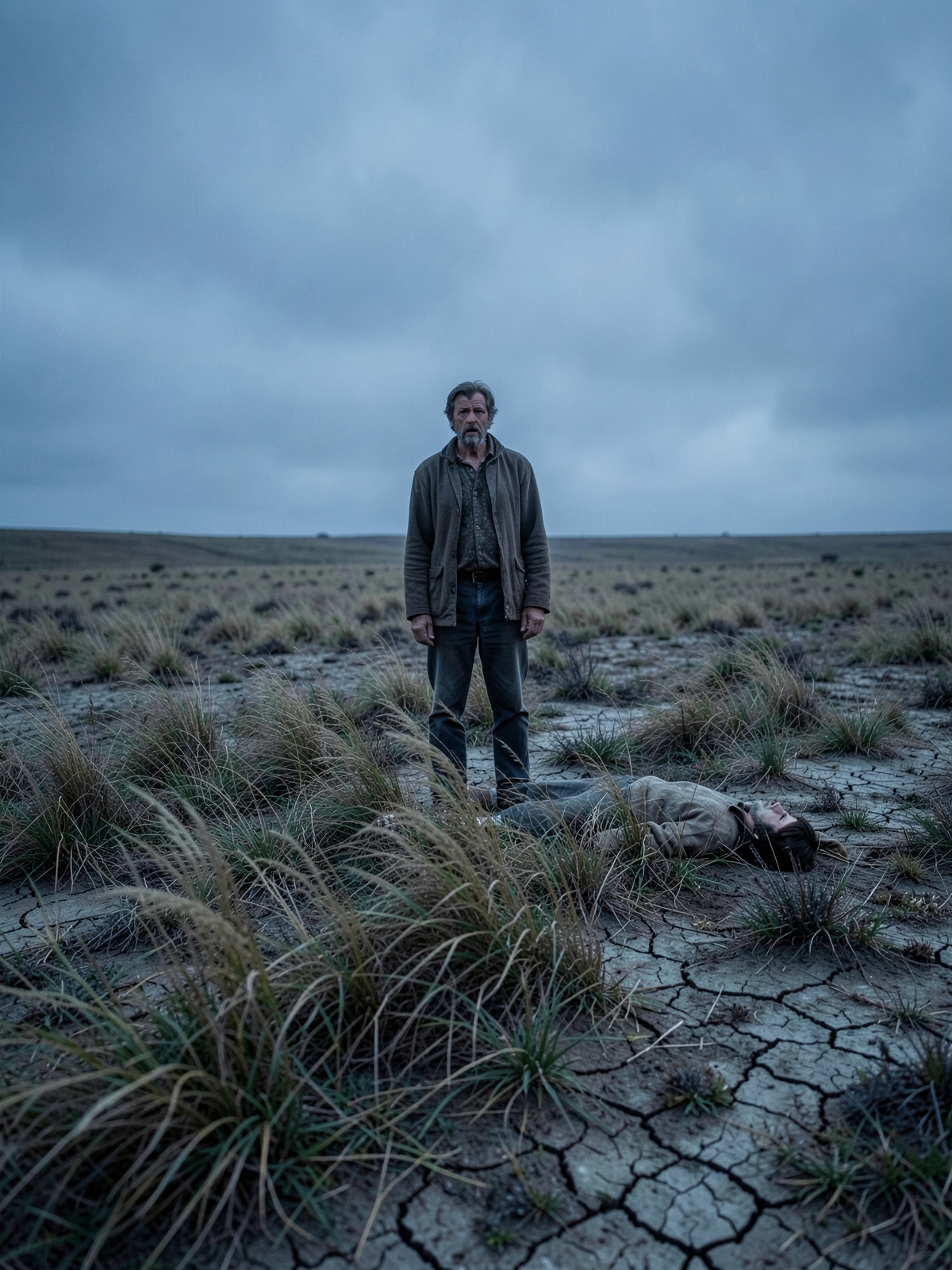
Generated SacraScenes visual interpretation for Genesis 4:8–16. It is not a photograph, archaeological reconstruction or doctrinal authority.
Why the visual is framed this way
The visual treatment is intentionally non-graphic. A field can be shown after the confrontation with Cain standing in shock or isolation while Abel lies partly obscured at a respectful distance. There is no need for blood, wounds or the moment of striking; the text’s moral weight does not depend on gore. The landscape can feel harsher and more exposed than Eden, reinforcing the connection between Cain, the ground and his coming restlessness. God is not represented as a human figure, and the protective mark is not given an invented symbol.
Source boundary
The page you are reading is original SacraScenes editorial content. It explains the scene boundary, narrative movement and visual choices without presenting the commentary as Scripture. In the immersive reader, the Story panel remains separate from the Scripture panel, and the public-domain edition is named beneath the source text. This separation lets readers compare the retelling with the source instead of relying on a blended paraphrase.
For Genesis 4, the immersive reader currently uses the public-domain World English Bible (Catholic). Slovenian and German visual scenes remain unavailable until their historical Catholic source text is reviewed. See Sources for attribution and Methodology for the editorial checklist.
Open Genesis 4:8–16 in the immersive reader →Back to all 4 scenes
Editorial scene note updated 24 September 2026.