Genesis 5:1–5 · Genesis 5 scene
Adam, Seth and the line continues
Genesis 5 introduces itself as the record of Adam’s generations and immediately reconnects the genealogy with the language of creation. Humanity was made in God’s likeness, male and female, blessed and named. The focus then narrows to Adam, who fathers Seth. Seth is described as being in Adam’s likeness and image, echoing the vocabulary used only a few lines earlier about humanity and God. Adam also has other sons and daughters, and the section closes by giving his total years and stating that he died.
What changes in this scene?
SacraScenes keeps verses 1–5 together because they establish the grammar of the chapter. A named ancestor lives, fathers the next named son, continues to have a wider family, reaches a stated lifespan and dies. The passage is not merely supplying ages for a timeline; its repetition will make continuity and mortality visible side by side. The editorial layer avoids converting the ancient ages into a modern scientific chronology or speculating about mechanisms behind them. It presents the genealogy as the text presents it and lets the repeated structure do its literary work.
Read it in the chapter’s flow
Verse 6 begins the repeated sequence with Seth and Enosh. From there the genealogy moves through Kenan, Mahalalel and Jared before reaching Enoch, where the formula changes dramatically. Ending this first scene with Adam’s death gives the reader one complete pattern before the long generational rhythm begins. In the immersive reader, Genesis 5:1–5 is loaded from the World English Bible (Catholic), while this page remains clearly marked as original SacraScenes editorial context.
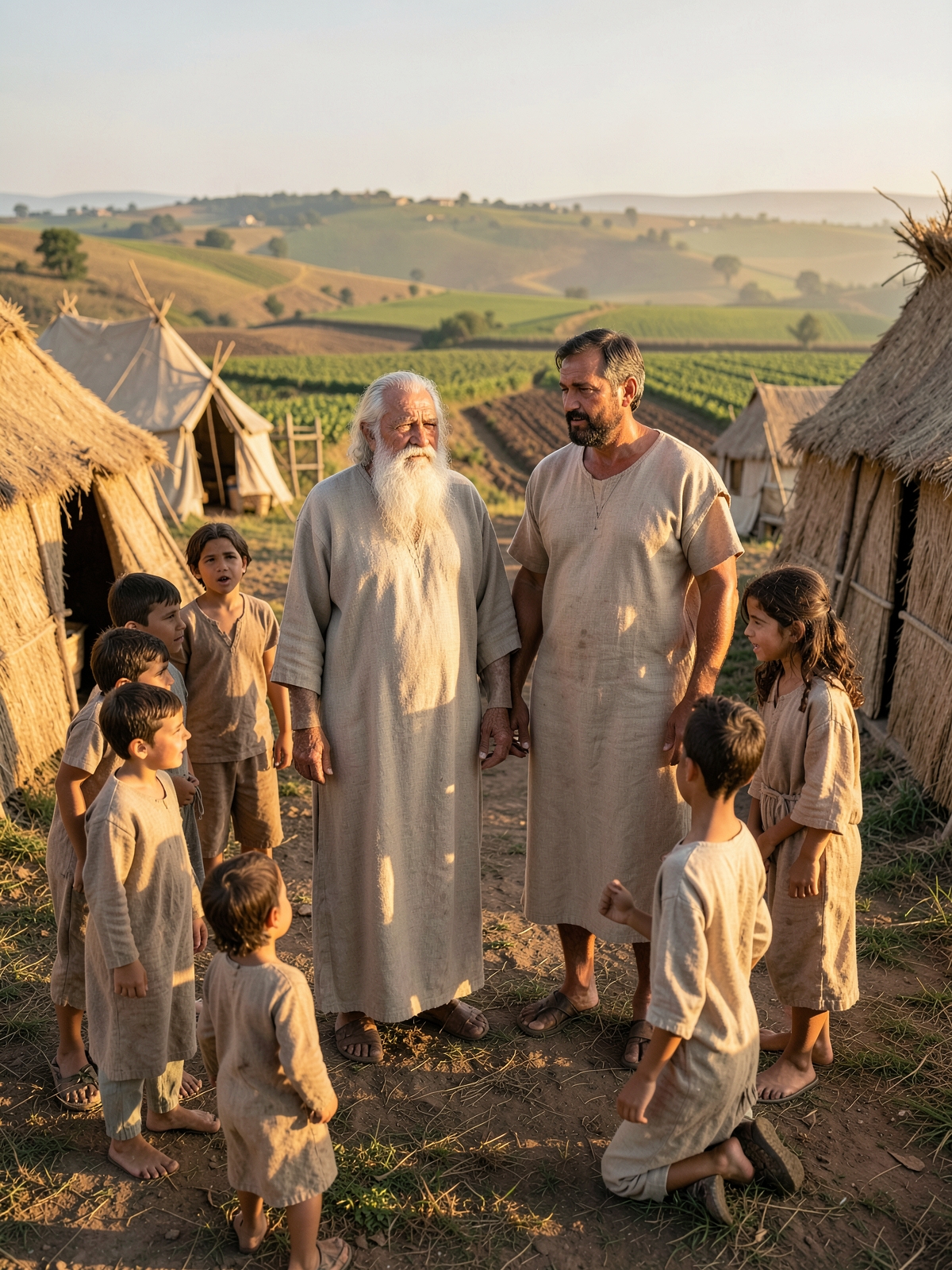
Generated SacraScenes visual interpretation for Genesis 5:1–5. It is not a photograph, archaeological reconstruction or doctrinal authority.
Why the visual is framed this way
A single image cannot literally show Adam’s entire lifespan. The visual therefore uses an early multi-generational family scene: an elderly Adam, an adult Seth and younger generations living on worked ground outside Eden. Simple dwellings, fields and family activity can suggest continuity without assigning portraits to every unnamed son and daughter. The image should not pretend to identify historically accurate faces. Its purpose is to make the chapter’s first transition—from the first human generation into a continuing family line—visually understandable.
Source boundary
The page you are reading is original SacraScenes editorial content. It explains the scene boundary, narrative movement and visual choices without presenting the commentary as Scripture. In the immersive reader, the Story panel remains separate from the Scripture panel, and the public-domain edition is named beneath the source text. This separation lets readers compare the retelling with the source instead of relying on a blended paraphrase.
For Genesis 5, the immersive reader currently uses the public-domain World English Bible (Catholic). Slovenian and German visual scenes remain unavailable until their historical Catholic source text is reviewed. See Sources for attribution and Methodology for the editorial checklist.
Open Genesis 5:1–5 in the immersive reader →Back to all 4 scenes
Editorial scene note updated 24 September 2026.