Genesis 5:6–20 · Genesis 5 scene
Generation after generation
The middle of Genesis 5 settles into a deliberate rhythm. Seth fathers Enosh; Enosh fathers Kenan; Kenan fathers Mahalalel; Mahalalel fathers Jared. Each paragraph then expands the same way: the named ancestor lives for additional years, has sons and daughters, reaches a stated total age and dies. The names change, the numbers change, but the structure remains strikingly stable. That repetition carries the line forward while also placing death at the end of generation after generation.
What changes in this scene?
SacraScenes does not split these verses into one page per ancestor because that would create several pages with almost identical narrative function and little independent visual value. The better unit is the repeated sequence itself. Reading the names together makes two things visible at once: the family line persists, and no generation escapes the closing statement of death. The editorial text therefore preserves the genealogy’s slowness without turning it into five nearly templated scene pages. It also avoids using the ages to calculate dates that the page cannot responsibly establish.
Read it in the chapter’s flow
Genesis 5:21 begins with Enoch and initially sounds like the same formula, but the pattern soon breaks. Instead of ending with “and he died,” Enoch is described as walking with God and then as no longer present because God took him. That textual exception creates a natural scene boundary after Jared. The immersive reader keeps the full Genesis 5:6–20 source range intact so the reader can experience the repeated cadence directly rather than relying only on this summary.
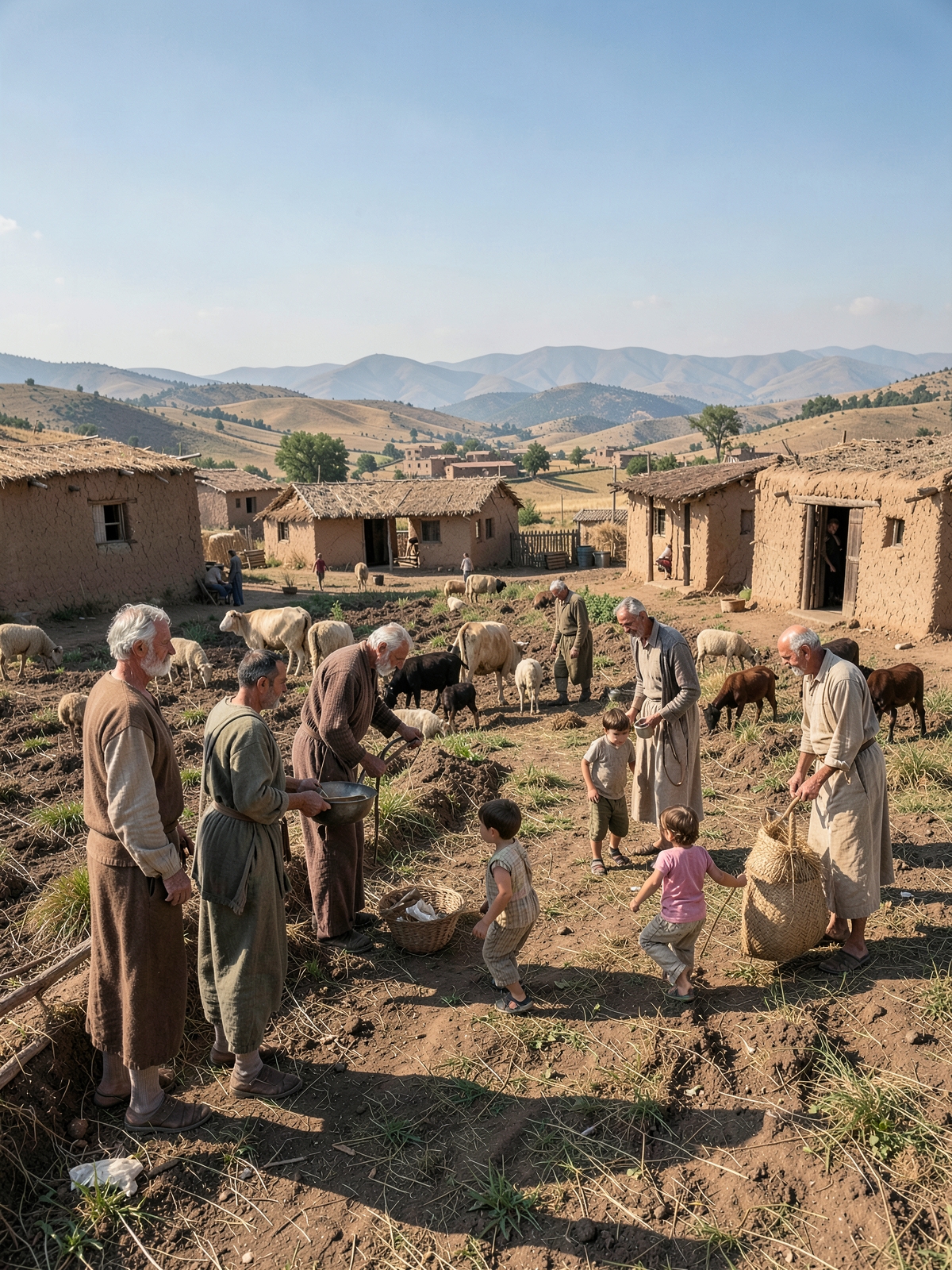
Generated SacraScenes visual interpretation for Genesis 5:6–20. It is not a photograph, archaeological reconstruction or doctrinal authority.
Why the visual is framed this way
The visual direction uses a wide multi-generational settlement rather than attempting one literal portrait for Seth, Enosh, Kenan, Mahalalel and Jared. Children, adults and elders can occupy the same early agrarian world, with fields, animals and simple dwellings showing human life continuing across generations. Changes in age and family scale communicate succession better than invented name labels. The image should feel lived-in and repetitive in a purposeful way: many ordinary lives unfolding between the dramatic stories of Genesis 4 and the exceptional note about Enoch that follows.
Source boundary
The page you are reading is original SacraScenes editorial content. It explains the scene boundary, narrative movement and visual choices without presenting the commentary as Scripture. In the immersive reader, the Story panel remains separate from the Scripture panel, and the public-domain edition is named beneath the source text. This separation lets readers compare the retelling with the source instead of relying on a blended paraphrase.
For Genesis 5, the immersive reader currently uses the public-domain World English Bible (Catholic). Slovenian and German visual scenes remain unavailable until their historical Catholic source text is reviewed. See Sources for attribution and Methodology for the editorial checklist.
Open Genesis 5:6–20 in the immersive reader →Back to all 4 scenes
Editorial scene note updated 24 September 2026.