Genesis 5:25–32 · Genesis 5 scene
The line reaches Noah
The genealogy resumes with Methuselah and then Lamech, repeating the familiar pattern of years, descendants and death. But when Lamech fathers a son, the text again slows to explain a name. He calls the child Noah and connects him with hope for relief from work and the painful toil of the ground that Yahweh had cursed. The words deliberately echo the world east of Eden, where human labor has remained difficult since Genesis 3. The chapter then advances Noah to five hundred years and names his sons: Shem, Ham and Japheth.
What changes in this scene?
SacraScenes keeps verses 25–32 together because they form the genealogy’s transition into the next major narrative. Methuselah and Lamech continue the established line, while Noah’s naming introduces expectation rather than merely another link in the chain. The final naming of Noah’s three sons signals that the genealogy has delivered the reader to the family who will dominate Genesis 6–9. The editorial layer does not assume that Lamech already knows how Noah will bring relief or equate his hope with every event that follows; it preserves the wording as expectation.
Read it in the chapter’s flow
Genesis 6 will leave the orderly genealogy and describe a world in deepening corruption before the narrative focuses on Noah and the ark. That contrast makes Genesis 5:25–32 an important threshold. The chapter has traced the Sethite line from Adam to Noah, repeatedly naming death while preserving continuity through each generation. The final verse places Shem, Ham and Japheth beside Noah so the next story can begin with its central family already in view. The reader preserves the complete source range separately from this editorial explanation.
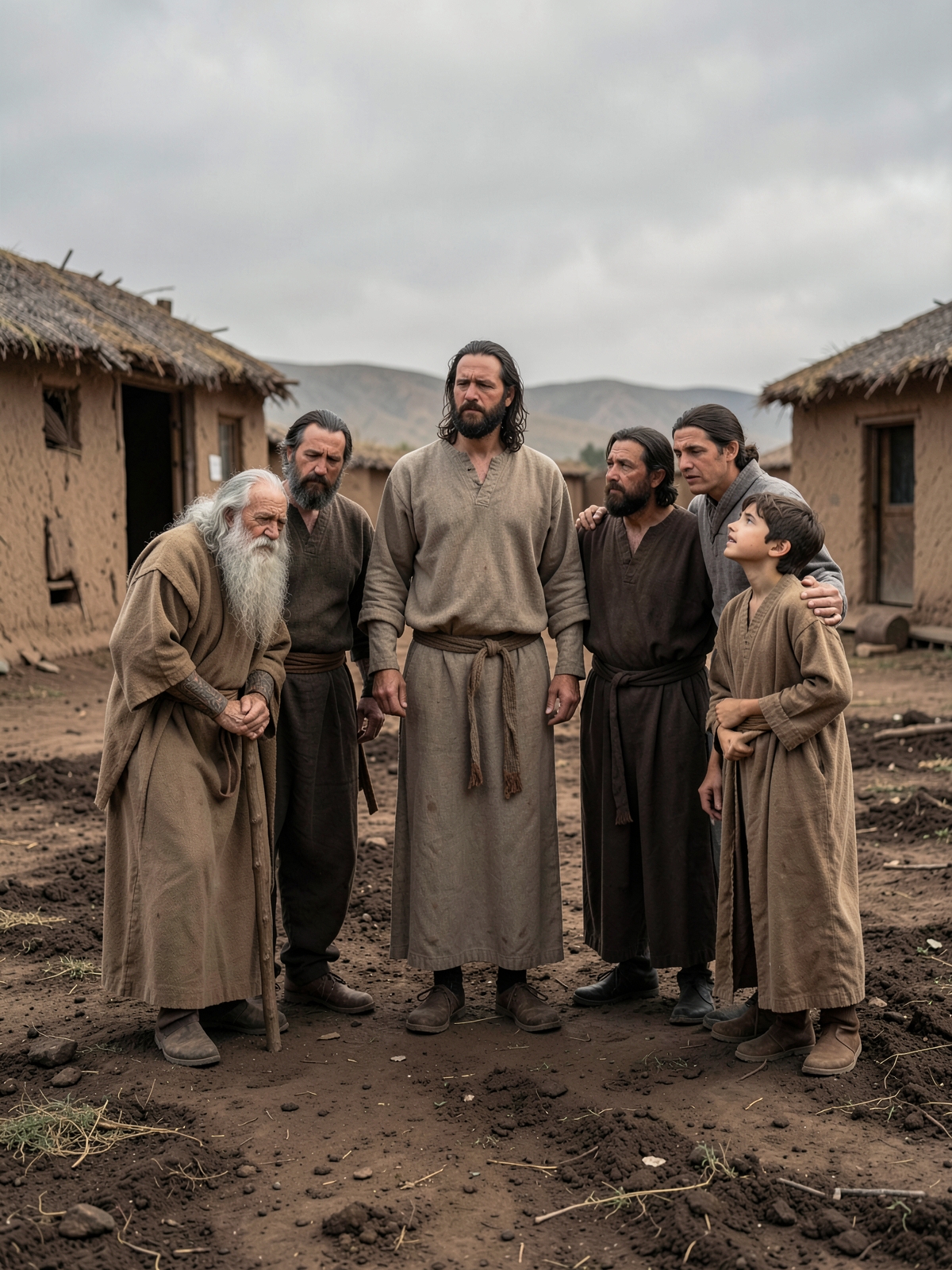
Generated SacraScenes visual interpretation for Genesis 5:25–32. It is not a photograph, archaeological reconstruction or doctrinal authority.
Why the visual is framed this way
The image direction can use a multi-generational family group moving from older Methuselah and Lamech toward adult Noah and his three sons. Worked ground, worn tools and an early settlement keep the curse-and-toil language visually present without turning the image into a literal timeline. Noah should not yet be shown building the ark, because Genesis 5 has not introduced that command. The scene is about arrival at Noah, not the flood itself. Its atmosphere can carry expectancy while remaining rooted in ordinary family and agricultural life.
Source boundary
The page you are reading is original SacraScenes editorial content. It explains the scene boundary, narrative movement and visual choices without presenting the commentary as Scripture. In the immersive reader, the Story panel remains separate from the Scripture panel, and the public-domain edition is named beneath the source text. This separation lets readers compare the retelling with the source instead of relying on a blended paraphrase.
For Genesis 5, the immersive reader currently uses the public-domain World English Bible (Catholic). Slovenian and German visual scenes remain unavailable until their historical Catholic source text is reviewed. See Sources for attribution and Methodology for the editorial checklist.
Open Genesis 5:25–32 in the immersive reader →Back to all 4 scenes
Editorial scene note updated 24 September 2026.