Genesis 6:1–4 · Genesis 6 scene
A difficult opening
Genesis 6 begins with four verses that have generated unusually diverse interpretations. Humanity is multiplying, daughters are born, “sons of God” see the daughters of men and take wives, a limit concerning human days is announced, and the Nephilim are mentioned alongside mighty men of old. The passage is terse. It does not pause to define every group it names, yet it stands immediately before Genesis describes human wickedness as great across the earth.
What changes in this scene?
SacraScenes treats the uncertainty itself as part of responsible reading. Interpreters have understood “sons of God” in different ways, including heavenly beings, powerful rulers or a particular human lineage. The Nephilim have likewise attracted later speculation far beyond the few words Genesis gives them here. This page does not decide that debate. The editorial retelling states what the passage says and stops where the text stops. That restraint is especially important in a visual project, because a single dramatic image can make one interpretation feel more certain than the source actually allows.
Read it in the chapter’s flow
Verse 5 changes the chapter’s focus decisively. Instead of continuing to identify the figures in verses 1–4, Genesis makes a broad moral assessment: human wickedness is great and the heart is continually inclined toward evil. SacraScenes therefore ends this scene at verse 4 and lets the next scene follow the textual shift. The immersive reader presents Genesis 6:1–4 separately from this commentary so users can compare the disputed passage directly with the public-domain Scripture source.
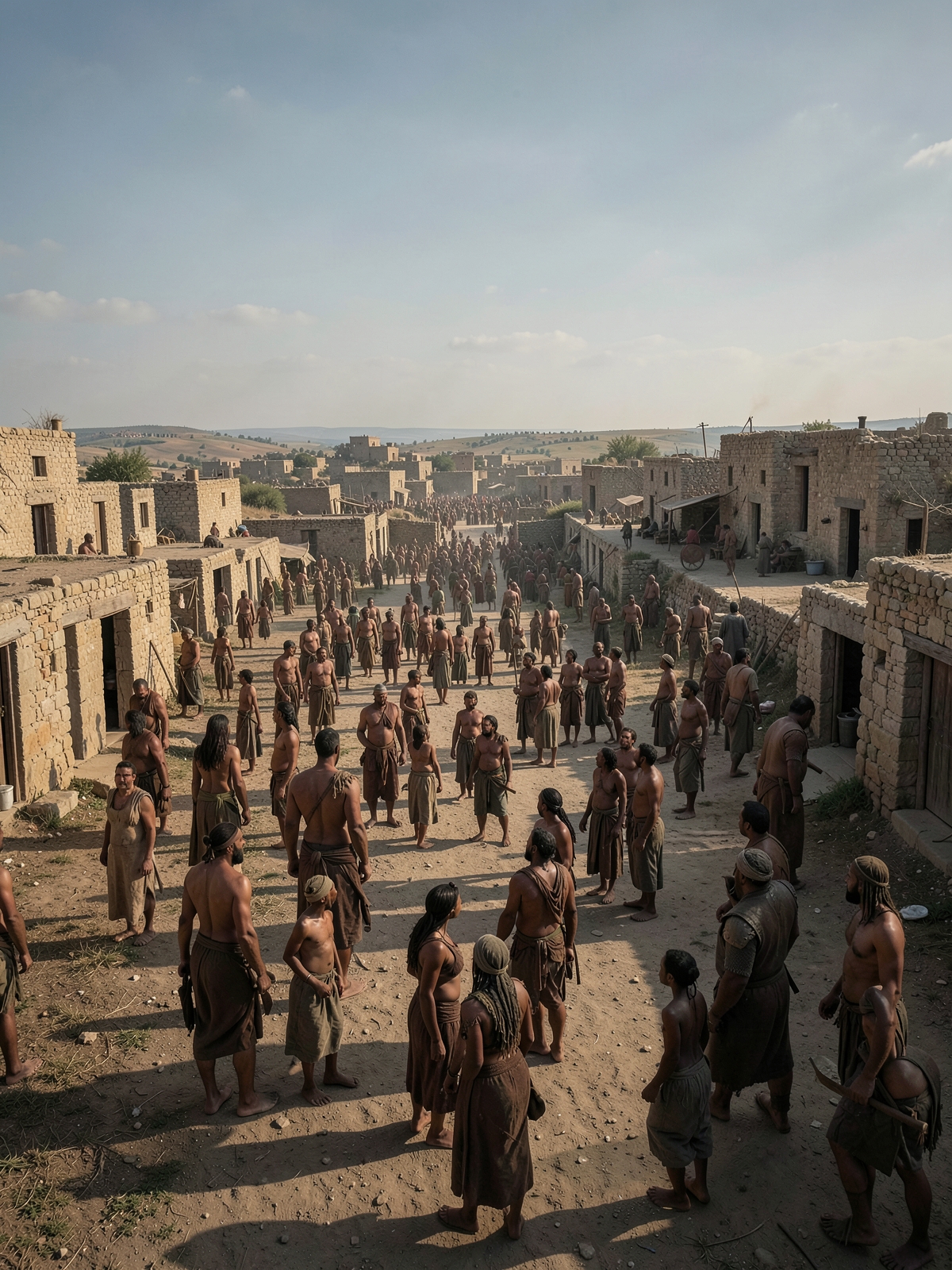
Generated SacraScenes visual interpretation for Genesis 6:1–4. It is not a photograph, archaeological reconstruction or doctrinal authority.
Why the visual is framed this way
The image direction therefore avoids wings, angelic beings, fantasy giants or supernatural hybrids. It shows an expanding ancient human world with powerful-looking men, families and a growing settlement, but it refuses to label those figures as the definitive identity of the “sons of God” or Nephilim. The visual is intentionally less literal than later Noah scenes because literalizing a disputed interpretation would mislead the reader. Atmosphere and human scale carry the mystery without pretending to solve it.
Source boundary
The page you are reading is original SacraScenes editorial content. It explains the scene boundary, narrative movement and visual choices without presenting the commentary as Scripture. In the immersive reader, the Story panel remains separate from the Scripture panel, and the public-domain edition is named beneath the source text. This separation lets readers compare the retelling with the source instead of relying on a blended paraphrase.
For Genesis 6, the immersive reader currently uses the public-domain World English Bible (Catholic). Slovenian and German visual scenes remain unavailable until their historical Catholic source text is reviewed. See Sources for attribution and Methodology for the editorial checklist.
Open Genesis 6:1–4 in the immersive reader →Back to all 4 scenes
Editorial scene note updated 24 September 2026.