Genesis 6:9–12 · Genesis 6 scene
Noah walked with God
The chapter now introduces Noah formally through the language of generations. He is called a righteous man, blameless among the people of his time, and one who walked with God. His sons Shem, Ham and Japheth are named. The description then returns to the world surrounding them: the earth is corrupt before God, filled with violence, and all flesh has corrupted its way. Noah’s character and the condition of the earth are therefore presented side by side.
What changes in this scene?
SacraScenes gives these verses their own scene because the ark is not yet the subject. Before Noah becomes the builder of an enormous vessel, the text explains why he occupies a different narrative position from the world around him. This also prevents the common visual shorthand in which Noah is defined only by a boat and animals. Genesis first describes him in terms of righteousness, blamelessness and walking with God. The editorial layer keeps those terms without claiming that Noah is sinless or resolving later theological questions the passage does not raise.
Read it in the chapter’s flow
Verse 13 begins a direct speech to Noah and immediately turns the narrative toward action: an end is announced, violence is named as the reason and Noah is commanded to make an ark. That clear shift creates the next scene boundary. Keeping verses 9–12 separate allows the reader to see that the ark command is grounded in the contrast already established between Noah and a corrupt earth. The Scripture panel preserves the exact WEBC wording independently from this editorial framing.
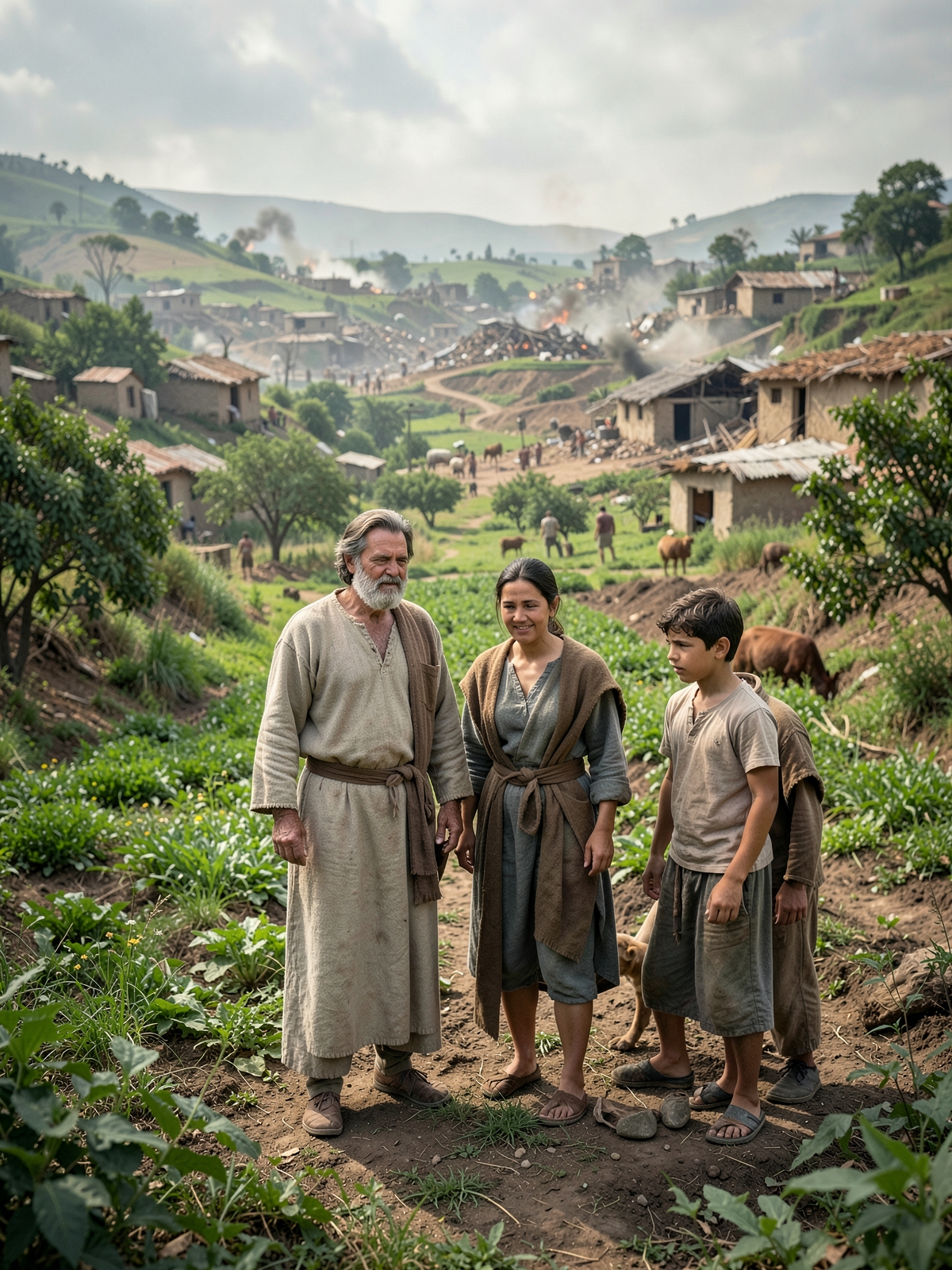
Generated SacraScenes visual interpretation for Genesis 6:9–12. It is not a photograph, archaeological reconstruction or doctrinal authority.
Why the visual is framed this way
The visual direction centers Noah, his wife and his three adult sons within an ordinary early settlement. They may be working together calmly while more distant parts of the community show disorder, intimidation or social strain. No ark should appear yet; otherwise the image would pull the reader forward into verses 13–22. The contrast is moral and relational, not architectural. The image also avoids depicting God, using Noah’s posture and family setting rather than a visible divine companion to communicate the phrase “walked with God.”
Source boundary
The page you are reading is original SacraScenes editorial content. It explains the scene boundary, narrative movement and visual choices without presenting the commentary as Scripture. In the immersive reader, the Story panel remains separate from the Scripture panel, and the public-domain edition is named beneath the source text. This separation lets readers compare the retelling with the source instead of relying on a blended paraphrase.
For Genesis 6, the immersive reader currently uses the public-domain World English Bible (Catholic). Slovenian and German visual scenes remain unavailable until their historical Catholic source text is reviewed. See Sources for attribution and Methodology for the editorial checklist.
Open Genesis 6:9–12 in the immersive reader →Back to all 4 scenes
Editorial scene note updated 24 September 2026.