Genesis 8:13–19 · Genesis 8 scene
The earth is dry
Genesis 8:13–19 marks the actual return to open ground. In Noah’s six hundred first year the waters have dried from the earth, and Noah removes the covering of the ark and sees a dry surface. The text then gives another date before saying that the earth is fully dry. Only after that does God tell Noah to leave the ark with his wife, his sons and their wives. The command includes every living creature with them so that life can spread, be fruitful and multiply on the earth.
What changes in this scene?
SacraScenes keeps these verses together because they make an important distinction between seeing dry ground and being told to leave. Noah has evidence outside the ark, but the narrative still includes waiting. The final movement is not simply “the door opens”; it is a coordinated exit of the household and preserved creatures into a renewed environment. The editorial retelling avoids turning the release of animals into a whimsical parade. It follows the text’s emphasis on restored space for life and renewed multiplication.
Read it in the chapter’s flow
The next action is Noah building an altar. That makes verse 19 a natural ending for the exit scene. Genesis does not move directly from leaving the ark to building cities or farms; the first recorded response is worship. Separating the exit from the altar lets both moments retain their own weight. The reader provides the exact Genesis 8:13–19 source wording alongside the SacraScenes Story layer, so users can distinguish the dates and commands of the biblical text from the project’s visual organization.
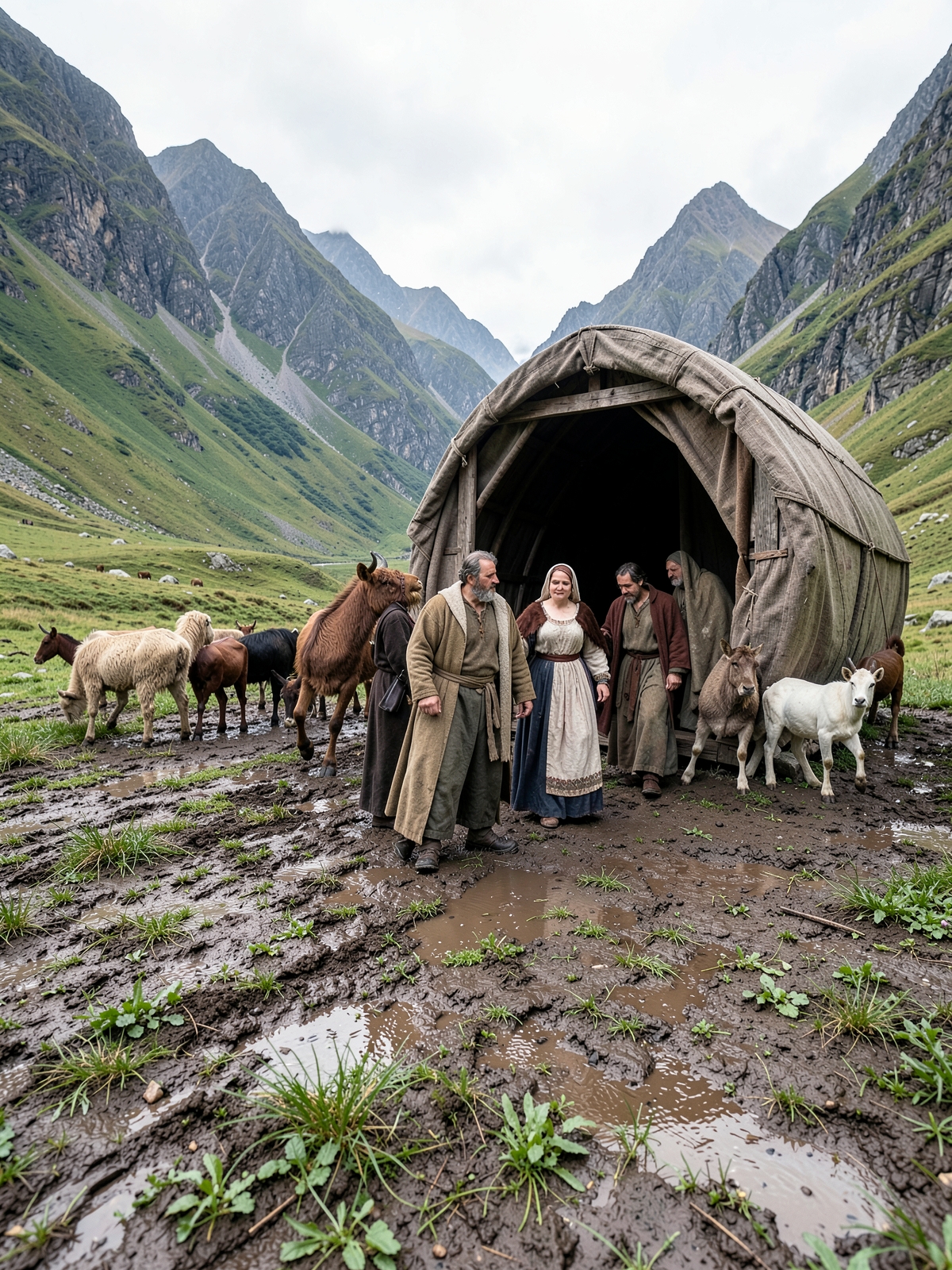
Generated SacraScenes visual interpretation for Genesis 8:13–19. It is not a photograph, archaeological reconstruction or doctrinal authority.
Why the visual is framed this way
The image shows Noah’s family leaving the ark onto genuinely dry but recently flooded ground. Animals emerge in natural groups behind them, with damp earth, sparse new vegetation and surrounding mountains indicating that the landscape is recovering rather than instantly lush. The ark remains physically present as the place they have just left. There is no rainbow yet, and the image avoids anachronistic tools, fences or settled agriculture. The main visual idea is openness: after long confinement, people and animals occupy land again.
Source boundary
The page you are reading is original SacraScenes editorial content. It explains the scene boundary, narrative movement and visual choices without presenting the commentary as Scripture. In the immersive reader, the Story panel remains separate from the Scripture panel, and the public-domain edition is named beneath the source text. This separation lets readers compare the retelling with the source instead of relying on a blended paraphrase.
For Genesis 8, the immersive reader currently uses the public-domain World English Bible (Catholic). Slovenian and German visual scenes remain unavailable until their historical Catholic source text is reviewed. See Sources for attribution and Methodology for the editorial checklist.
Open Genesis 8:13–19 in the immersive reader →Back to all 4 scenes
Editorial scene note updated 24 September 2026.