Genesis 9:1–7 · Genesis 9 scene
Be fruitful and multiply
Genesis 9 begins with language that deliberately echoes creation. Noah and his sons are blessed and told to be fruitful, multiply and fill the earth. At the same time, the relationship between humanity and other creatures is described in changed terms, and animals are now given for food alongside green plants. The permission is not without a boundary: flesh with its life—its blood—is not to be eaten. The passage then turns from animal life to human life and makes human bloodshed a matter of special accountability.
What changes in this scene?
SacraScenes keeps verses 1–7 together because they function as a compact post-flood ordering of life. Multiplication, food, blood and human violence are not random topics placed side by side; they all concern how life is to continue in the world after the flood. The statement that humanity is made in God’s image gives the prohibition of murder its distinctive weight. The editorial layer does not convert the passage into a modern legal code or dietary guide. It follows the text’s sequence and preserves the difference between permission to eat animals and the separate boundary around blood.
Read it in the chapter’s flow
Verse 8 begins a direct covenant speech addressed to Noah, his sons and every living creature. That shift is strong enough to create the next scene. Ending at verse 7 lets the reader first understand the renewed human commission and its boundaries before the covenant promise and rainbow are introduced. In the immersive reader, the full Genesis 9:1–7 source wording remains separately labelled as the public-domain World English Bible (Catholic).
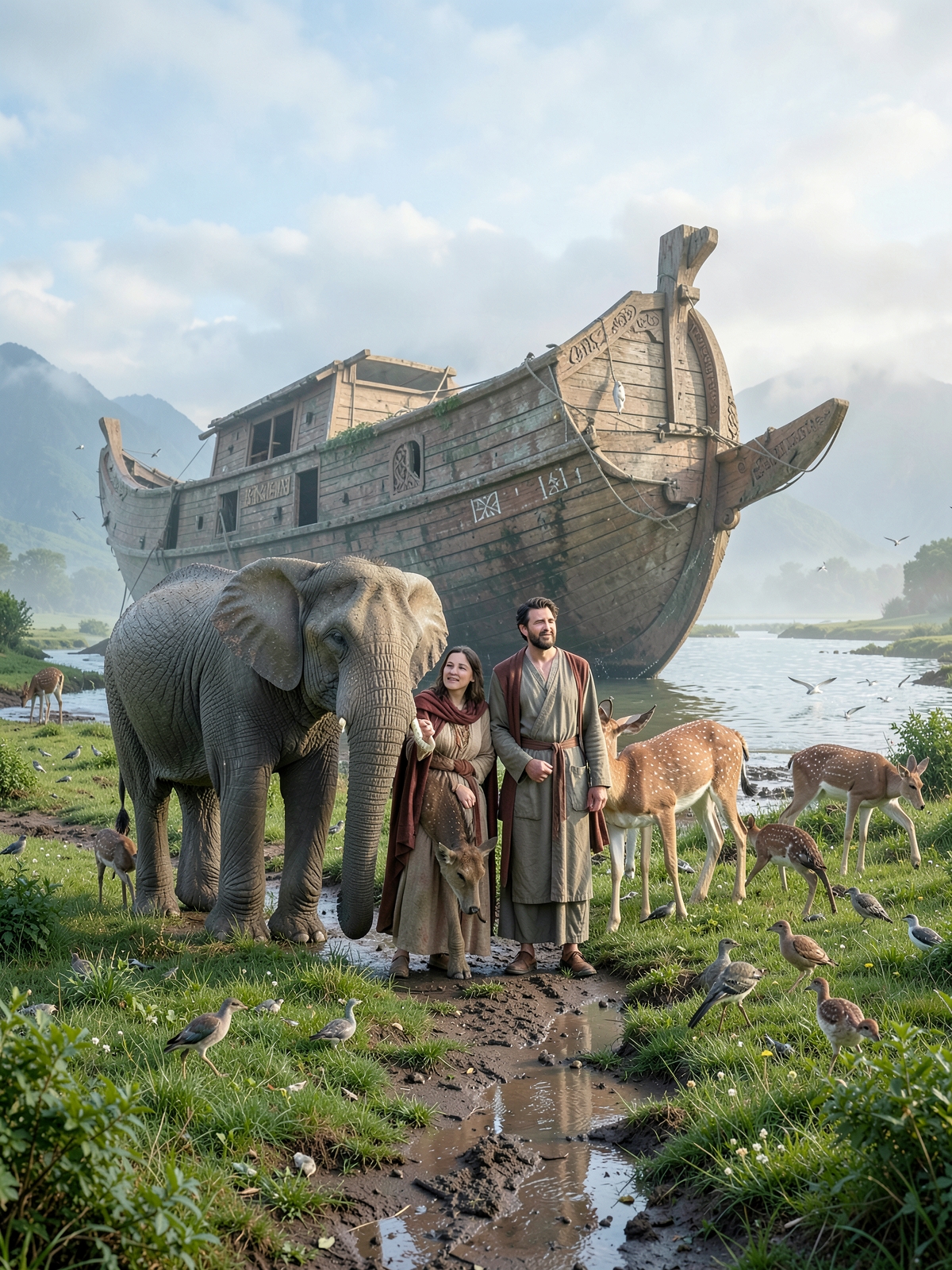
Generated SacraScenes visual interpretation for Genesis 9:1–7. It is not a photograph, archaeological reconstruction or doctrinal authority.
Why the visual is framed this way
The visual shows Noah’s family on renewed ground with the ark behind them and animals dispersing across the landscape. It avoids a hunting or slaughter scene, because the main visual movement is life spreading out again rather than food preparation. The landscape should feel post-flood but habitable: exposed earth, fresh growth and families beginning again. No rainbow appears yet; Genesis attaches that sign to the covenant in the next scene. God is not depicted as a human figure.
Source boundary
The page you are reading is original SacraScenes editorial content. It explains the scene boundary, narrative movement and visual choices without presenting the commentary as Scripture. In the immersive reader, the Story panel remains separate from the Scripture panel, and the public-domain edition is named beneath the source text. This separation lets readers compare the retelling with the source instead of relying on a blended paraphrase.
For Genesis 9, the immersive reader currently uses the public-domain World English Bible (Catholic). Slovenian and German visual scenes remain unavailable until their historical Catholic source text is reviewed. See Sources for attribution and Methodology for the editorial checklist.
Open Genesis 9:1–7 in the immersive reader →Back to all 4 scenes
Editorial scene note updated 24 September 2026.