Leviticus 17:10–12 · Leviticus 17 scene
Life is associated with blood, which is not food
The prohibition on eating blood is grounded in the life it represents and its role in atonement.
What changes in this scene?
Teaching at a meal makes the ethical boundary visible without blood.
Read it in the chapter’s flow
The reason given here is theological and ritual: the passage connects blood with life and atonement. It is not a scientific explanation of food safety, nor does it authorize a modern dietary diagnosis.
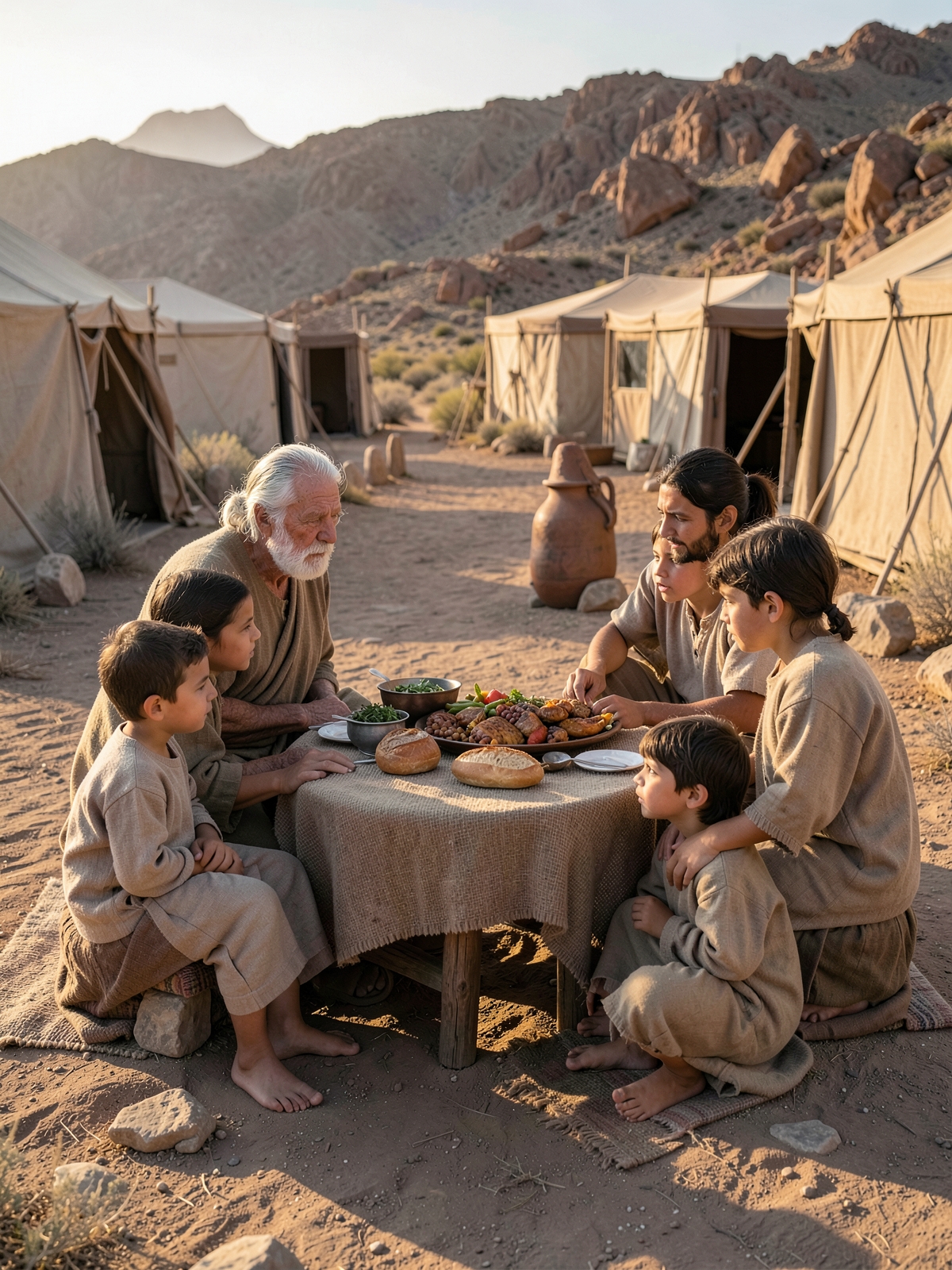
Generated SacraScenes visual interpretation for Leviticus 17:10–12. It is not a photograph, archaeological reconstruction or doctrinal authority.
Why the visual is framed this way
A family receiving instruction at a modest meal draws attention to a food boundary without showing blood or a sacrifice. The setting is interpretive and makes no modern medical claims.
Close reading of Leviticus 17:10–12
The stated prohibition applies to both Israelite members of the community and resident foreigners. The source gives its own rationale: the life of the flesh is associated with blood, which has a role at the altar for atonement. These linked claims should be read together rather than replaced with a contemporary account of nutrition or infection. The illustration chooses discussion rather than a graphic object, while the Scripture reader preserves the words that explain the ancient command. The next unit applies related distinctions to hunting and animals found dead.
Source boundary
The page you are reading is original SacraScenes editorial content. It explains the scene boundary, narrative movement and visual choices without presenting the commentary as Scripture. In the immersive reader, the Story panel remains separate from the Scripture panel, and the public-domain edition is named beneath the source text. This separation lets readers compare the retelling with the source instead of relying on a blended paraphrase.
For Leviticus 17, the immersive reader currently uses the public-domain World English Bible (Catholic). Slovenian and German visual scenes remain unavailable until their historical Catholic source text is reviewed. See Sources for attribution and Methodology for the editorial checklist.
Open Leviticus 17:10–12 in the immersive reader →Back to all 4 scenes
Editorial scene note updated 31 October 2026.