Leviticus 7:1–10 · Leviticus 7 scene
Guilt and grain offerings define priestly portions
The guilt offering is called most holy, and the chapter explains priestly portions from it and from different grain offerings.
What changes in this scene?
Stewardship of portions is central.
Read it in the chapter’s flow
This is one of four natural reading movements used for Leviticus 7. The next scene continues the chapter while the Scripture panel preserves the complete assigned verse range.
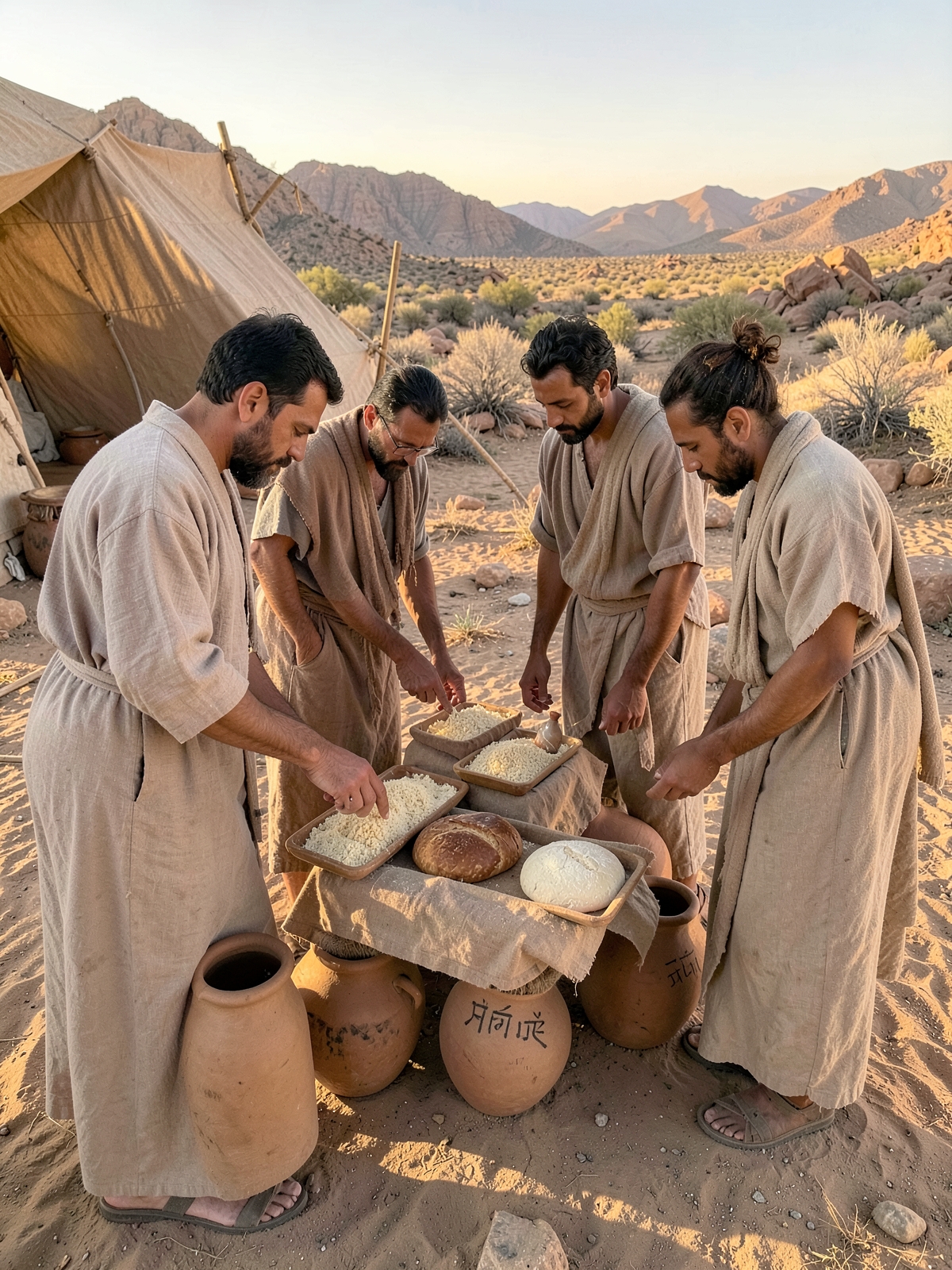
Generated SacraScenes visual interpretation for Leviticus 7:1–10. It is not a photograph, archaeological reconstruction or doctrinal authority.
Why the visual is framed this way
The image remains an interpretive reading aid rather than documentary evidence. Priests organizing covered offering portions, baked grain and flour on clean trays beside labeled-by-position but unreadable storage vessels, no slaughter, blood, raw flesh or modern pantry.
Reading this scene carefully
Priests organizing covered offering portions, baked grain and flour on clean trays beside labeled-by-position but unreadable storage vessels, no slaughter, blood, raw flesh or modern pantry.
Source boundary
The page you are reading is original SacraScenes editorial content. It explains the scene boundary, narrative movement and visual choices without presenting the commentary as Scripture. In the immersive reader, the Story panel remains separate from the Scripture panel, and the public-domain edition is named beneath the source text. This separation lets readers compare the retelling with the source instead of relying on a blended paraphrase.
For Leviticus 7, the immersive reader currently uses the public-domain World English Bible (Catholic). Slovenian and German visual scenes remain unavailable until their historical Catholic source text is reviewed. See Sources for attribution and Methodology for the editorial checklist.
Open Leviticus 7:1–10 in the immersive reader →Back to all 4 scenes
Editorial scene note updated 3 October 2026.