Genesis 10:6–12 · Genesis 10 scene
Nimrod and the first kingdoms
The line of Ham begins with familiar genealogical form, but one name changes the pace. Cush fathers Nimrod, and Genesis describes him as becoming a mighty man on the earth and as a mighty hunter before Yahweh. The passage then associates the beginning of his kingdom with Babel, Erech, Akkad and Calneh in Shinar, before moving toward Assyria and cities including Nineveh. The genealogy has become briefly architectural and political: power, hunting and city-building enter the chapter together.
What changes in this scene?
SacraScenes keeps verses 6–12 as one scene because Nimrod’s description and the named cities form a single interruption inside the genealogy. The editorial layer does not make him a fantasy giant, demonized tyrant or heroic founder beyond what the verses state. It also does not assume that every later story connected with Babel should be imported backward into this scene; Genesis 11 will tell its own tower narrative next. Here the emphasis is narrower: a figure marked by unusual might is linked with a growing network of early kingdoms and cities.
Read it in the chapter’s flow
After verse 12, the chapter returns to denser genealogical lists. Mizraim’s descendants are named, then the text gives a sequence connected with Canaan and a geographic description of Canaanite territory. That change makes Nimrod’s city-centered section stand out even more. The next scene will therefore move away from one prominent individual and back toward families, peoples and territories, while retaining the same caution against turning ancient names into a modern racial chart.
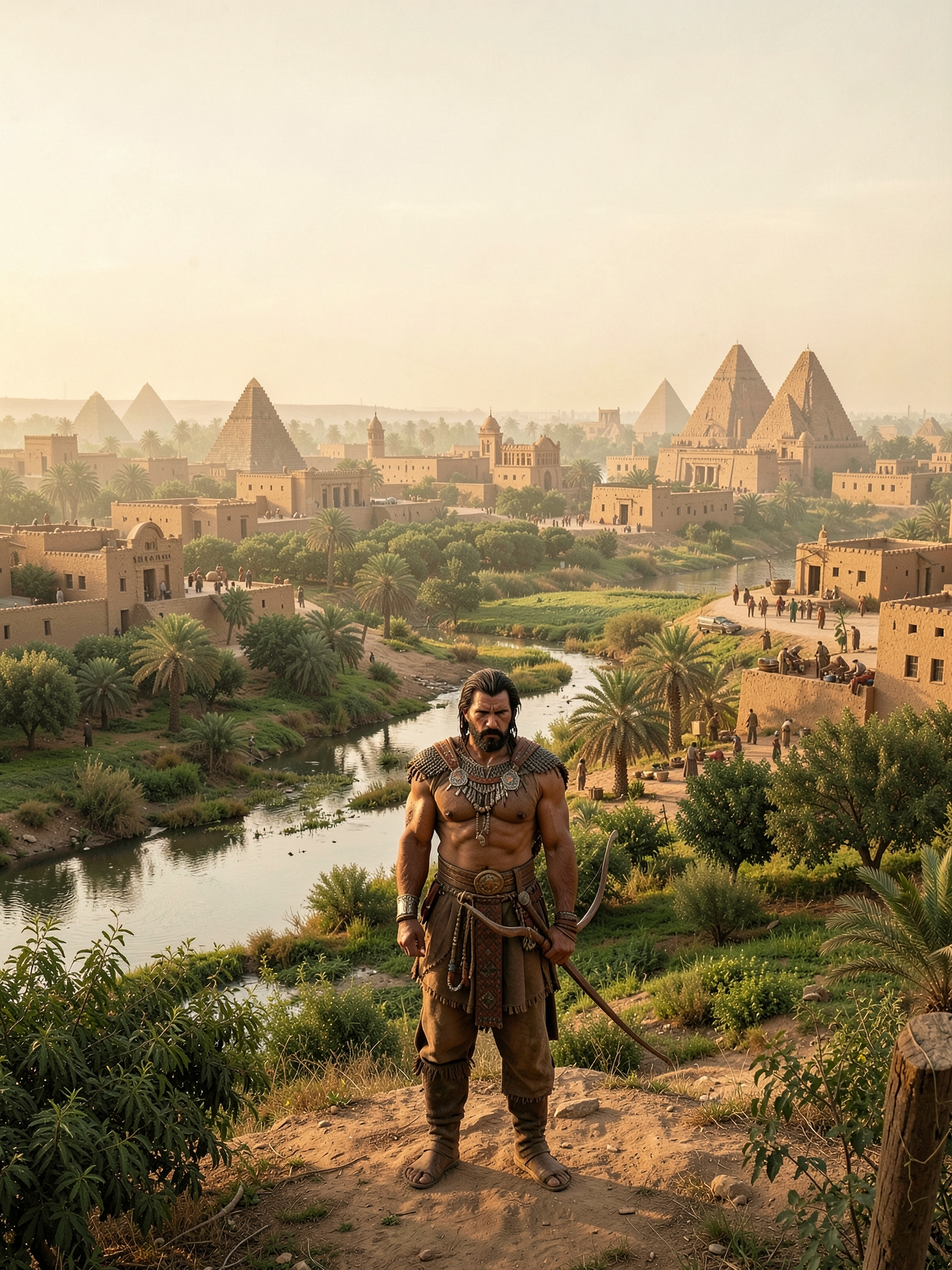
Generated SacraScenes visual interpretation for Genesis 10:6–12. It is not a photograph, archaeological reconstruction or doctrinal authority.
Why the visual is framed this way
The image uses a broad river-plain settlement with several mud-brick urban centers at different distances and a powerful adult hunter-king figure whose weapon is lowered rather than used in a violent spectacle. That lets the visual acknowledge both hunting and kingdom-building without glorifying conquest. No modern uniforms, crowns, flags or ethnic caricatures appear. The architecture is intentionally ancient and generalized, because the generated image is not an archaeological reconstruction of Babel, Erech, Akkad or Nineveh. Scale and emerging urban power matter more than invented precision.
Source boundary
The page you are reading is original SacraScenes editorial content. It explains the scene boundary, narrative movement and visual choices without presenting the commentary as Scripture. In the immersive reader, the Story panel remains separate from the Scripture panel, and the public-domain edition is named beneath the source text. This separation lets readers compare the retelling with the source instead of relying on a blended paraphrase.
For Genesis 10, the immersive reader currently uses the public-domain World English Bible (Catholic). Slovenian and German visual scenes remain unavailable until their historical Catholic source text is reviewed. See Sources for attribution and Methodology for the editorial checklist.
Open Genesis 10:6–12 in the immersive reader →Back to all 4 scenes
Editorial scene note updated 24 September 2026.